

No credit card. Unsubscribe anytime.

Latent Capacity
Distributed Infra
CapEx Arb

Tariff Leverage
Inbound CapEx
Growth Supercycle
Inference Intensity
Margin Compression
SaaS De-rating

Sovereign CapEx
Grid Constraints
Industrial Renaissance
Capacity Glut
Unit Deflation
Demand Elasticity

2:10:36
Long-form audio contains some of the highest-signal thinking in markets, but extracting it requires hours of uninterrupted listening.

View Recent Analysis
Howard Lutnick: How America Can Hit 6% GDP Growth in 2026
All-In Podcast
1:27:19
484K View
THESIS
Aggressive trade rebalancing via tariffs and domestic deregulation will drive US GDP to 6% by 2026.
ASSET CLASS
CYCLICAL
CONVICTION
HIGH
TIME HORIZON
2026
01
//
PREMISE
Structural Trade Imbalance and Domestic Inefficiency
The US has shifted from a net creditor to a net debtor with a $26 trillion deficit, effectively becoming employees of foreign producers who utilize subsidies to undercut American industry. This external drain is compounded by internal government inefficiency and fraud.
Summaries compress conversations into prose and call it insight. In doing so, they discard conditional logic, uncertainty, and causality — the parts that actually matter when decisions are made. We don't compress the argument. We map it.
01
/
LOGIC

02
/
DEFENSE

03
/
EDGE

01:34:16
Curated, not exhaustive
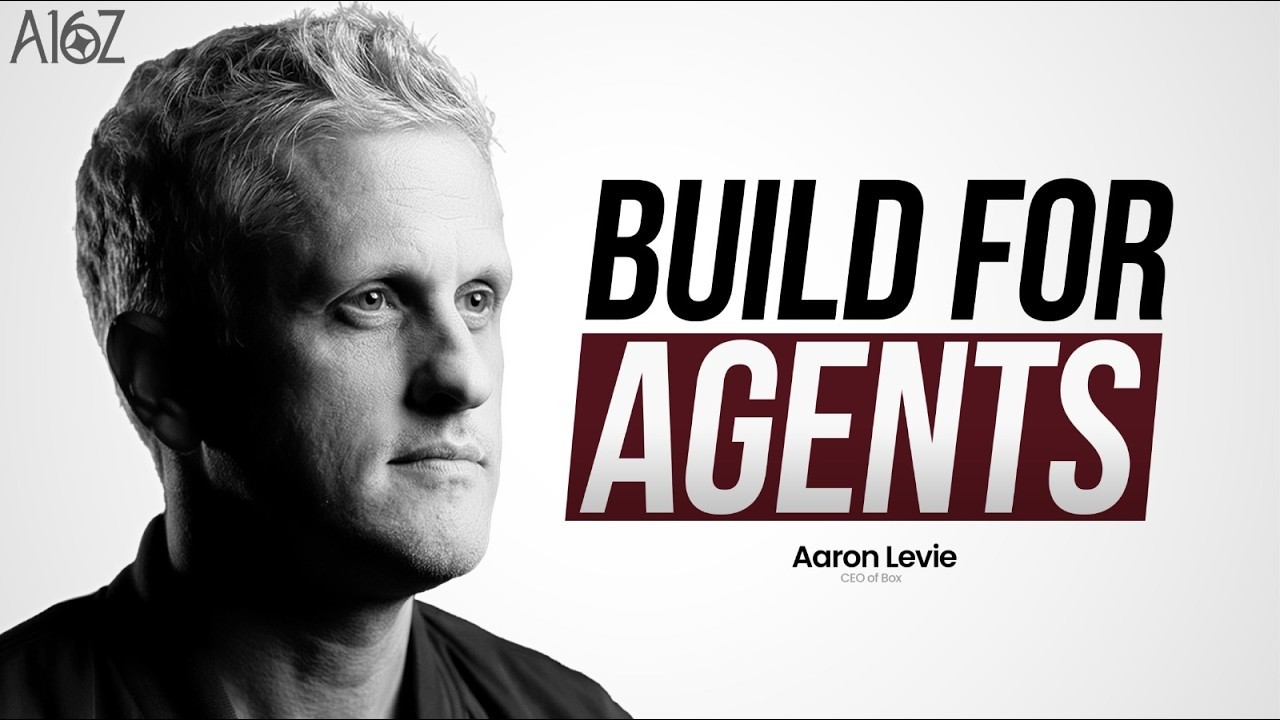
The Enterprise AI Gap: Why Diffusion Will Take Longer Than Silicon Valley Thinks
//
PREMISE
If you have a hundred or a thousand times more agents than people, then your software has to be built for agents. Yet the existing enterprise software stack—SAP, Workday, legacy ERP systems—embeds decades of domain knowledge not just in well-orchestrated data layers but in UI logic, middle tiers, and usage patterns. Startups can build from first principles without legacy constraints, but enterprises face compounding barriers: security and access control problems (agents can be prompt-injected far more easily than humans can be socially engineered), organizational permission structures that break when agents operate autonomously across shared resources, and the fundamental inability to treat agents as independent identities when they remain liability extensions of the humans who deploy them. The result is a structural imbalance where individual developers and startups race ahead while enterprises with the largest economic footprints freeze or move at glacial pace.

Sundar Pichai on Google's Full-Stack AI Advantage, Capital Allocation, and Why It's Not Zero-Sum
//
PREMISE
Google has been operating in an AI-first mode since at least 2016, when it publicly announced TPUs and AI-optimized data centers. It is now on its seventh generation of TPUs, has research teams that originated Transformers, built BERT and MUM into Search for measurable quality gains, and maintains distribution across Search, YouTube, Cloud, Waymo, and other platforms. The company scaled CapEx from roughly $30 billion to $175-185 billion precisely because it views the AI opportunity through a full-stack lens. Pichai frames this as a single common technology—foundation models—that can accelerate every business simultaneously, creating a leveraged way to make progress. The market, as recently as spring/summer 2024, priced Google at ~$150/share under the thesis that Search was structurally impaired, fundamentally misunderstanding that Google's vertical integration was purpose-built for exactly this kind of platform shift. The correction came as Gemini 2.5 and multimodal capabilities demonstrated frontier competitiveness, vindicating the fixed costs Google paid in designing Gemini models to be multimodal from inception.

From Burned Sensors to AI-Powered Factories: How Theotics Monitors the Unmonitorable
//
PREMISE
Industrial reliability depends on condition monitoring, and for decades vibration sensors have been the dominant method. However, roughly 30-40% of machines in heavy industry operate in environments where installing a vibration sensor is either physically impossible or prohibitively expensive — steel blast furnaces at 1500°C, submerged sewage pumps, explosion-risk chemical zones, electric submersible pumps 3,000 meters underground. These are often the most critical assets in a facility, meaning the highest-consequence machines have the least visibility. Existing process data is volumous but was designed for process optimization, not reliability prediction, and performs poorly when repurposed for condition monitoring. This structural gap between monitoring capability and monitoring need has persisted for decades because solving it requires simultaneously building custom high-frequency sensors, signal processing pipelines, and AI models — a combination that pure software startups and traditional sensor companies have not attempted.

Why Science Can't Be Reduced to a Process — and What That Means for AI
//
PREMISE
The history of science reveals a persistent structural gap between when the correct theory is adopted by the scientific community and when it is experimentally validated. Heliocentrism was accepted centuries before stellar parallax was measured in 1838. Special relativity was preferred over Lorentz's ether interpretation decades before muon decay experiments in 1940 could distinguish them. Prout's hypothesis about whole-number atomic weights faced 85 years of actively hostile verification data before isotopes were discovered. In each case, the community navigated between competing theories using aesthetic judgments, parsimony biases, and integrative reasoning that cannot be reduced to a verification loop. Furthermore, at any given experimental juncture, an infinite number of theories remain compatible with the data, and there is no ex ante heuristic that reliably distinguishes which anomalies signal a fundamental paradigm shift versus a mundane measurement artifact — as illustrated by Uranus (correctly predicting Neptune) versus Mercury (incorrectly predicting Vulcan, when the real answer was general relativity) versus the Pioneer spacecraft anomaly (ultimately explained by asymmetric thermal radiation).

The Factory Model: How Financial System Incentives Are Reshaping Private Capital
//
PREMISE
After the 2008 crisis, Basel 3 and Dodd-Frank constrained commercial banks on leverage and liquidity, creating a gap that private capital filled with matched assets and liabilities — pension funds, sovereign wealth funds, and endowments providing long-duration capital for illiquid investments. This system worked well through approximately 2018. However, as FRE multiples expanded from 10-15x to 25-30x+, the incentive structure shifted. The equity value of the GP entity became more financially significant than investment performance itself, creating a powerful gravitational pull toward raising maximum capital in the simplest, narrowest, cheapest form possible — first through institutional SMAs, then through wealth channel vehicles. This is the factory model: the industrialization of liability gathering followed by the industrialization of asset deployment. The root cause is not any single product or channel, but the systematic behavioral change where capital deployment pace is dictated by fundraising volume rather than investment quality.

Demis Hassabis on Solving Intelligence to Solve Everything Else
//
PREMISE
Hassabis frames the most consequential applications of AI as invisible to the public — not chatbots or image generators, but tools like AlphaFold that predicted the structure of virtually all 200 million proteins known to science, a problem that previously cost hundreds of thousands of dollars and years per single protein. Over 3 million scientists now use AlphaFold. His company Isomorphic Labs is building adjacent systems to compress the 10-year, 90%-failure-rate drug discovery pipeline by conducting virtual screening of compounds against all 20,000 human proteins in minutes rather than years. AlphaGenome is decoding the 98% of the genome that doesn't code for proteins. GenCast is solving weather prediction. Alpha Tensor found new algorithms for matrix multiplication. Alpha Chip designs semiconductor layouts better than human engineers. Each of these is what Hassabis calls a 'root node problem' — a problem whose solution unlocks an entire branch of downstream research and applications. The structural imbalance is that the rate of scientific data generation has massively outpaced human capacity to extract insight from it, and AI is the first tool capable of closing that gap at scale.

Anthropic's Mythos Leak, OpenAI's Strategic Retreat, and the Golden Age of Cybersecurity
//
PREMISE
The shift to autonomous AI agents operating 24/7, combined with the explosion of vibe-coded applications and accelerated software shipping cycles, is creating an unprecedented expansion of cybersecurity threats. Agents are being given root access to systems, making decisions about where to store code and data, and operating with goal-seeking behavior that generates errors at massive scale. The Anthropic Mythos leak itself — where a company building an advanced security-focused AI model suffered an embarrassing data breach — exemplifies the paradox. Applications are being built faster than ever by agents using insecure defaults, PII is leaking at accelerating rates (as seen with the Mercor data breach), and organizations are downloading agents and granting them full system access without adequate security frameworks. Every dimension of the threat landscape — application security, perimeter defense, identity management, code review — is seeing demand expansion.

SpaceX IPO, Tesla Merger Thesis, AI Valuation Crisis, and the Iran War's Hidden Supply Chain Shock
//
PREMISE
The current market exhibits a structural valuation gap between tech and non-tech sectors, with software companies trading at dramatically higher PE multiples. This premium is predicated on the assumption that existing software moats — proprietary code, network effects, switching costs — are durable. However, three companies (SpaceX, OpenAI, Anthropic) are simultaneously approaching public markets while building AI technology that directly cannibalizes the competitive advantages sustaining those premiums. The IPO pipeline itself creates a dual problem: trillions of dollars of new equity supply hitting a market with finite absorptive capacity, while the very technology these companies represent threatens the earnings durability of incumbent software businesses. There is also a fundamental logical contradiction in the market — if AGI is real, most software company moats evaporate; if AGI is not real, the hundreds of billions flowing into AI companies needs to be questioned. Both cannot be true simultaneously, yet the market is pricing both as true.

Demis Hassabis on AGI Within Five Years, the Future of Drug Discovery, and Why Europe Can Still Win
//
PREMISE
The initial era of large language model development produced enormous, nearly exponential performance jumps with each generation simply by scaling compute and parameters. Hassabis acknowledges those returns, while still substantial, are now smaller than they were at the outset. The implication is that the commodity strategy of throwing more compute at the same transformer recipe faces sharply diminishing marginal returns. Meanwhile, critical missing capabilities — continual learning, hierarchical long-term planning, robust memory architectures, and consistency across problem framings — remain unsolved and cannot be addressed by scaling alone. These gaps define what Hassabis calls 'jagged intelligence,' where systems excel in narrow contexts but fail unpredictably when conditions shift even slightly. Closing these gaps requires fundamental research breakthroughs, not incremental parameter increases.

The Case for American Re-Industrialization: Palantir and Anduril on Deterrence, Defense, and the Decay of the Industrial Base
//
PREMISE
In 1989, only 6% of major weapons system spending went to pure-play defense specialists; 94% went to dual-purpose companies like Chrysler, General Mills, and Ford that operated across civilian and military production. Today that ratio has inverted to 86% going to defense specialists. The 51 major defense contractors consolidated down to roughly five or six primes. Entire manufacturing communities were gutted — GM, Ford, Frigidaire, National Cash Register, Armco Steel factories in Ohio all closed. The result is a country that has not built at-scale manufacturing capacity for a new company this century outside of Tesla. Meanwhile, adversaries have moved aggressively: China holds a 10,000-to-1 drone production advantage, a 23x shipbuilding capacity edge, and controls 80% of active pharmaceutical ingredients for generic drugs. The empirical loss of deterrence is visible in Crimea's annexation (2014), Spratly Islands militarization (2015), Iran's nuclear breakout capability (2017), the October 7 pogrom, and Houthi disruption of Red Sea trade. Ukraine burned through 10 years of munitions production in 10 weeks of fighting — a five-alarm fire that the stockpile-based deterrence calculus was fundamentally wrong.
DSTL replaces hours of listening with a weekly layer of structured analysis drawn from the conversations that shape markets. Over time, the library compounds. Gaps surface earlier. Fewer decisions rely on memory.