

Latent Capacity
Distributed Infra
CapEx Arb

Tariff Leverage
Inbound CapEx
Growth Supercycle

Inference Intensity
Margin Compression
SaaS De-rating

Sovereign CapEx
Grid Constraints
Industrial Renaissance

Capacity Glut
Unit Deflation
Demand Elasticity

2:10:36
Long-form audio contains some of the highest-signal thinking in markets, but extracting it requires hours of uninterrupted listening.

View Recent Analysis
Howard Lutnick: How America Can Hit 6% GDP Growth in 2026
All-In Podcast
1:27:19
484K View
THESIS
Aggressive trade rebalancing via tariffs and domestic deregulation will drive US GDP to 6% by 2026.
ASSET CLASS
CYCLICAL
CONVICTION
HIGH
TIME HORIZON
2026
01
//
PREMISE
Structural Trade Imbalance and Domestic Inefficiency
The US has shifted from a net creditor to a net debtor with a $26 trillion deficit, effectively becoming employees of foreign producers who utilize subsidies to undercut American industry. This external drain is compounded by internal government inefficiency and fraud.
Summaries compress conversations into prose and call it insight. In doing so, they discard conditional logic, uncertainty, and causality, the parts that actually matter when decisions are made.
DSTL is built on a different premise: that conversations should be structured, not shortened.
01
/
LOGIC

02
/
DEFENSE

03
/
EDGE

01:34:16
Curated, not exhaustive

How Elon Builds Trillion-Dollar Companies
//
PREMISE
SpaceX has successfully navigated the bottleneck of Falcon 9 reusability, creating a vertically integrated manufacturing machine that moves with unmatched speed and flexibility. This operational foundation has positioned the company to shift focus from merely accessing space to utilizing massive upcoming launch capacity for proprietary infrastructure rather than just third-party delivery.
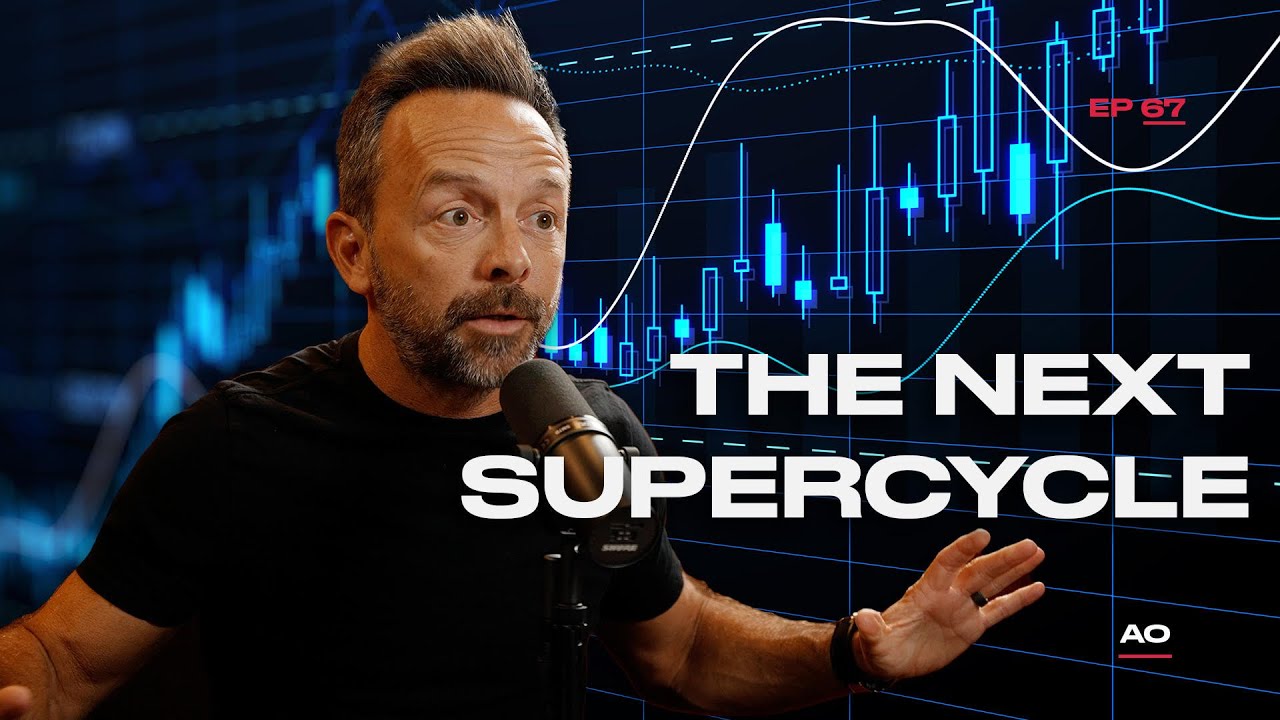
Brad Gerstner on the AI Supercycle & Restoring Faith in Capitalism
//
PREMISE
We are at the early stages of an AI 'Super Cycle' (Augmented Intelligence) that surpasses the Internet, Mobile, and Cloud in importance. While market prices have corrected, the structural innovation wave provides extraordinary return opportunities for those entering early in the cycle.

Conversation between David Sacks and Marc Benioff | World Economic Forum Annual Meeting 2026
//
PREMISE
The current US landscape faces a threat from 1,200 pending AI-related bills across 50 states, creating a patchwork regulatory environment that burdens startups and erodes the traditional advantage of a seamless national market.

Gecko Robotics CEO, Jake Loosararian on AI and Physical Robots
//
PREMISE
The current AI revolution faces a structural bottleneck: while LLMs effectively index the internet, there is no comparable data corpus for the 'built world.' Critical industrial sectors like defense, energy, and manufacturing lack the digitized, high-fidelity datasets required to train models on asset health, welding quality, and structural integrity.

Cerebras CEO, Andrew Feldman on Compute Power
//
PREMISE
Traditional GPU architectures are constrained by the physical separation of compute and memory, creating significant latency (the 'memory wall'). This bottleneck limits inference speed, forcing users to wait seconds for results and preventing seamless, real-time agentic AI workflows.

Coinbase CEO, Brian Armstrong on Crypto Adoption
//
PREMISE
The U.S. regulatory environment has shifted from hostile to supportive, evidenced by the new administration's focus on clear rules. Simultaneously, major financial institutions, including five of the top 20 global banks and asset managers like BlackRock, are building crypto infrastructure, viewing blockchain adoption as an existential necessity rather than a speculative threat.
WTF is happening at xAI | Sulaiman Ghori
//
PREMISE
The current software and AI landscape is plagued by artificial limitations—both technical (bloated stacks) and organizational (bureaucratic layering). Competitors accept perceived constraints on speed and latency that are not physically mandated, resulting in 'lossy' information transfer and slow iteration cycles.
Howard Lutnick: How America Can Hit 6% GDP Growth in 2026
//
PREMISE
The US has shifted from a net creditor to a net debtor with a $26 trillion deficit, effectively becoming employees of foreign producers who utilize subsidies to undercut American industry. This external drain is compounded by internal government inefficiency and fraud.
Marc Andreessen's 2026 Outlook: AI Timelines, US vs. China, and The Price of AI
//
PREMISE
The per-unit cost of AI intelligence is collapsing faster than Moore's Law, while the internet provides a pre-built carrier wave to deploy these capabilities instantly to 5 billion people.
GPUs, TPUs, & The Economics of AI Explained | Gavin Baker Interview
//
PREMISE
AI scaling laws for pre-training remain empirically intact, but the industry is shifting toward 'post-training' reasoning (test-time compute). Historically, Google has used its proprietary TPUs to be the low-cost producer of tokens, allowing them to 'suck the economic oxygen' out of the ecosystem by running at negative margins that competitors couldn't match.
DSTL replaces hours of listening with a weekly layer of structured analysis drawn from the conversations that shape markets. Over time, the library compounds. Gaps surface earlier. Fewer decisions rely on memory.
Become a Member