
THESIS
//
//
//
//
NECESSARY CONDITION
Regulatory frameworks must remain permissive to innovation (avoiding the 'European' model) and open source development must remain unencumbered by downstream liability.
32:15
RISK
Steel Man Counter-Thesis
Perennial's thesis — that combining institutional-grade investment talent with a tech-founder-centric multifamily office creates a structurally superior wealth management model — may be fundamentally undermined by three independent forces. First, the wealth management industry is undergoing rapid commoditization: tax-loss harvesting, options overlay strategies, and alternative asset access are increasingly available through technology platforms (Wealthfront, iCapital, CAIS, Addepar) at a fraction of the cost of a bespoke advisory team. The 'professional investor' moat erodes as algorithmic tools replicate much of the portfolio construction and tax optimization work. Second, Perennial's deeply homogeneous client base (tech founders, concentrated in a single geography, vintage, and sector) creates a fragility that no amount of investment sophistication can offset — a severe tech correction simultaneously impairs all client portfolios, triggers mass tax-loss harvesting demand, and potentially reduces Perennial's own revenue precisely when operational costs remain fixed. This is the opposite of the diversified institutional pools (pensions, endowments, sovereigns) that Michelle cites as the gold standard. Third, and most fundamentally, the empirical evidence on multifamily offices suggests that the 'institutional quality investing' claim rarely survives scrutiny: Cambridge Associates data shows that even sophisticated endowments with dedicated investment teams and 30+ year track records frequently underperform simple 60/40 portfolios on an after-fee, after-tax basis. A four-year-old MFO with no published track record, managing a couple dozen correlated clients, has provided zero evidence that it can outperform the simple alternative it dismisses. The strongest counter-thesis is therefore: Perennial is a relationship-retention tool for A16Z's venture franchise disguised as an investment management innovation, and its clients would likely achieve comparable or superior after-tax outcomes with a low-cost index core, a specialized tax attorney, and selective direct co-investment access — all of which are increasingly available without a bundled advisory relationship.
//
THESIS
DEFENSE
//
THESIS
DEFENSE
//
THESIS
DEFENSE
//
ASYMMETRIC SKEW
Downside is substantial and multi-vector: if the tech cycle turns, Perennial faces simultaneous AUM decline, client liquidity crises, talent attrition, and revenue compression — all correlated. The fee savings thesis is unproven over any meaningful time horizon, meaning clients bear the opportunity cost of a potentially underperforming approach for a decade before results are visible. Upside, while real in a continued tech bull market, is bounded by the fact that Perennial's investment edge is assertion-based rather than evidence-based, and the structural conflicts with A16Z's fund business may silently erode the quality of diversification advice. The asymmetry skews negative: the downside scenarios are correlated and reflexive (they compound each other), while the upside scenario requires sustained tech prosperity, successful talent retention, and investment outperformance — three independent conditions that must all hold simultaneously.
ALPHA
NOISE
The Consensus
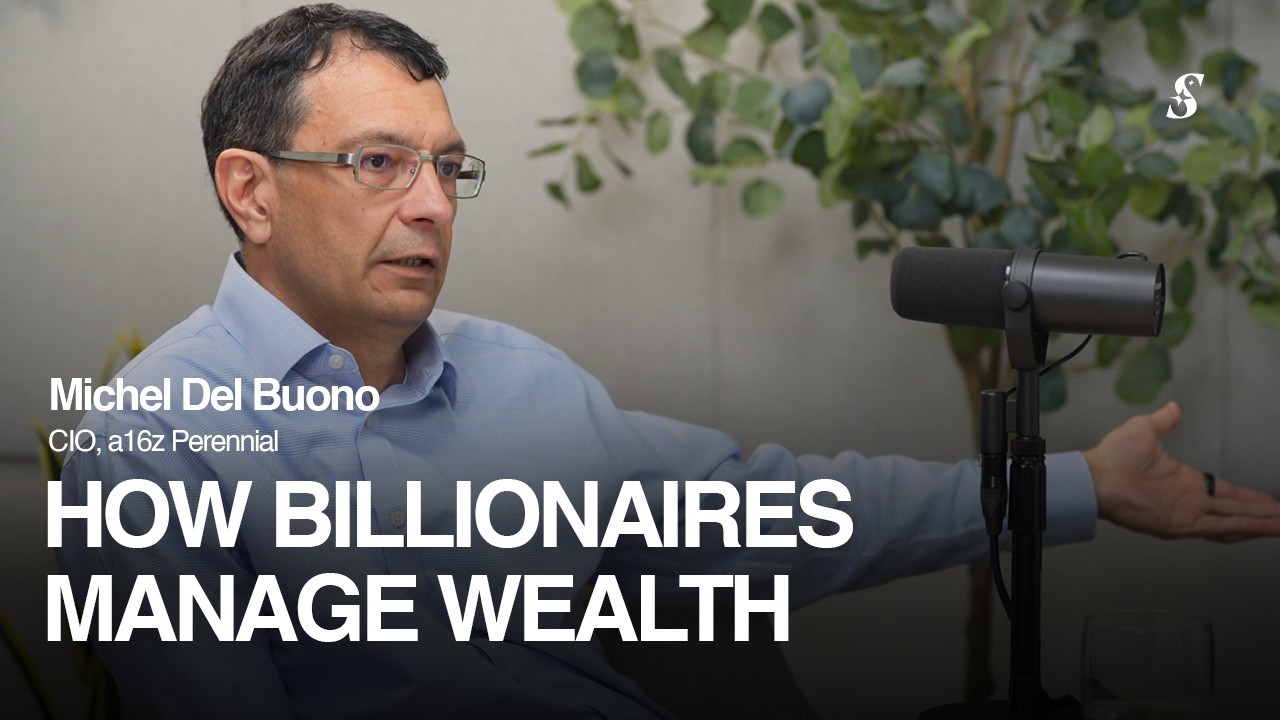
The market broadly believes that traditional wealth management — whether through independent RIAs spun out of banks or institutional asset managers — adequately serves high-net-worth and ultra-high-net-worth individuals. The consensus view is that the wealth management industry's current structure (AUM-based flat fees, fund-of-funds approaches to alternatives, and service-oriented relationship management) is sufficient, and that single family offices represent the gold standard for the wealthiest families. The market also believes the IPO window remains largely closed, that private credit is a sound asset class, and that venture capital's broad return profile makes it a standard portfolio allocation for newly liquid founders.
The market's logic is that wealth management firms add value primarily through service quality, relationship management, and access to brand-name alternative investments. AUM-based fees are justified because they align the advisor's incentive with growing client wealth. Institutional asset managers deliver best-in-class pre-tax returns by accessing top-tier managers. Single family offices provide maximum control and customization. The secondary SPV market provides necessary liquidity to pre-IPO employees. Founders investing in early-stage ventures post-liquidity is rational because they possess domain expertise and proprietary deal flow from their networks.
SIGNAL
The Variant
The speaker believes there is a profound structural failure in the wealth management industry that amounts to a no-man's-land for taxable individuals with institutional-scale wealth. Neither traditional wealth management firms (which lack genuine investment acumen and are incentivized by flat AUM fees to deliver simple, beta-heavy portfolios) nor institutional asset managers (which are structurally unable to optimize for after-tax returns because their primary clients are tax-exempt) properly serve this cohort. The speaker argues that the entire industry's fee structure creates perverse incentives that suppress investment quality, that the proliferation of single family offices is largely misguided for all but the largest balance sheets, and that the secondary/SPV market is rife with fraud and structural risk that participants routinely fail to diligence. The speaker also believes that newly liquid founders systematically destroy wealth by immediately recycling proceeds into illiquid, unsystematic venture bets with friends rather than building diversified, institutionally constructed portfolios.
The speaker's causal logic is multi-layered and structural. First, wealth management firms spun out of banks inherit a culture where professionals were trained as service providers and rewarded for book-of-business growth, never for investment performance — this cultural DNA persists post-spinout and cannot be remediated incrementally. Second, the flat AUM fee structure creates a rational economic incentive to avoid building expensive alternative investment teams (which require hiring people paid on performance), resulting in simple stock-and-bond portfolios dressed up with high-touch service — a 'retail product with a veneer of high-end service.' Third, the failure to build internal investment capability forces a fund-of-funds approach, layering fees that create a 300-400 basis point annual headwind on endowment-style portfolios — and building even half of that capability internally generates roughly 200 basis points of structural alpha simply from fee savings. Fourth, institutional asset managers cannot optimize after-tax returns without breaching fiduciary duty to their predominantly tax-exempt client base, creating a structural impossibility rather than a choice. Fifth, single family offices fail because they require the principal to effectively become CEO of an asset management company, which they neither want nor are equipped to do, leading to talent retention failures and eventual dissolution upon generational transfer. Sixth, the secondary SPV market is structurally dangerous because the employee-manager of the entity retains control over the underlying shares with no obligation to seek approval from investors — a governance flaw that is invisible to participants who rely on intuition rather than reading operating agreements.
SOURCE OF THE EDGE
The speaker's claimed edge rests on three pillars: (1) an insider position within the A16Z ecosystem providing proprietary access and diligence capabilities across the firm's portfolio network, (2) direct observation of incoming portfolios from other wealth management firms that reveals systematic quality failures in real time, and (3) professional investment experience that enables pattern recognition around fee structures, portfolio construction errors, and founder behavioral mistakes. The first pillar is genuine and structural — being embedded inside one of the most connected venture firms in the world provides an access-and-diligence advantage that is extremely difficult to replicate, and the speaker explicitly acknowledges this as a '2x2 matrix' advantage. The second pillar is credible but self-serving: seeing bad portfolios walk in the door is real operational data, but it is also selection-biased toward dissatisfied clients, making it an unreliable basis for sweeping industry indictments. The third pillar — the emphasis on hiring 'professional investors' defined as people who were paid purely on investment performance — is a reasonable hiring heuristic but is presented as more differentiated than it actually is; many sophisticated multi-family offices and endowment-style firms employ such professionals. The overall edge assessment: the A16Z network access advantage is real and defensible. The critique of the wealth management industry is largely accurate but widely understood by sophisticated market participants — it is more of a well-articulated consensus among institutional allocators than a variant perception. The speaker is partly constructing a marketing narrative (we are different because we have real investors) around a genuine but narrower structural advantage (A16Z network access and deal flow). The edge is real but somewhat overstated in its differentiation claims.
//
CONVICTION DETECTED
• 'These people are trained to be service providers. They're trained to be responsive, helpful, but actual investment acumen when you're at a large bank sits in a separate group.' • 'You're never trained to be an investment person, per se.' • 'I would call it mostly retail product but with a veneer of very high-end service' • 'If I'm selling you a bunch of services, why am I charging you an AUM fee?' • 'If you're paid the same to do something easy or something difficult, I think human nature is such that you'll do the easy thing' • 'So they are not at all focused on the taxable element' • 'You could even argue that from a fiduciary perspective, they're not allowed to optimize after tax return' • 'They're structurally not able to serve you' • 'Almost always this ends in tears' • 'The industry is set up to sort of trap you' • 'The odds of them moving again are extremely low' • 'This firm has entity value' • 'The amount of talent in this firm is mind-blowing' • 'I have a great great advantage there'
//
HEDGE DETECTED
• 'It'll be an interesting test of the markets if they can sort of... I mean that would be the largest IPO ever' • 'I would not purport or claim to know more about SpaceX as someone that's worked there 20 years' • 'Maybe I'm being exaggerating, but very rarely do those outcomes happen' • 'I'm not suggesting you should do everything yourself because it's too hard' • 'I'm not an art specialist but I know art specialists that can help you' • 'Some people do execute of course but they have very large balance sheets' • 'Right now there's no indication of a slowdown... but it's a levered high-risk strategy' • 'I don't know that there's an immediate sort of macro event that causes these companies to not be able to support their debt' • 'I think SpaceX, but it depends' • 'But no, no one thought before that that it'd be easy to raise that sum and it was easy to raise it' The ratio of conviction to hedging reveals a speaker who is highly certain about their structural critique of the wealth management industry and their own firm's differentiated positioning, but hedges meaningfully when asked about forward-looking market predictions (IPO timing, private credit risk, macro outcomes). This is a credible pattern: the speaker displays genuine confidence in areas where they have direct operational experience and observation (industry structure, fee dynamics, portfolio quality) and appropriate epistemic humility about things outside their control (market timing, macro events). This is not performed certainty — it is domain-specific confidence, which increases the weight that should be placed on the structural and operational claims while suggesting the speaker's macro views should be treated as informed but non-differentiated.