
THESIS
//
//
//
//
NECESSARY CONDITION
Regulatory frameworks must remain permissive to innovation (avoiding the 'European' model) and open source development must remain unencumbered by downstream liability.
55:32
RISK
Steel Man Counter-Thesis
The thesis assumes military operations will conclude rapidly, oil disruption will be transitory, and post-conflict conditions will yield lower energy prices and restored alliance cohesion. The strongest counter-thesis is that this conflict represents a strategic trap rather than a strategic opportunity. Iran's dispersed infrastructure, proven ability to operate through proxies, and potential for asymmetric escalation via Houthi attacks, Hezbollah activation, or cyberwarfare mean the US may achieve tactical victories while losing the strategic war of attrition. The 400 million barrel reserve release reveals that current market equilibrium already requires extraordinary intervention to maintain; any extension of hostilities exhausts this buffer while simultaneously straining allied relationships through tariff actions and basing disputes. The combination of depleted reserves, elevated energy costs, fractured alliances, and potential secondary conflicts creates a scenario where even military success delivers economic and geopolitical outcomes worse than the pre-conflict status quo. Historical precedent from Iraq demonstrates that rapid military victories can precede decade-long occupational costs and regional destabilization. The market may be pricing a quick war while the fundamentals suggest an extended commitment with compounding costs.
//
THESIS
DEFENSE
//
THESIS
DEFENSE
//
THESIS
DEFENSE
//
ASYMMETRIC SKEW
Downside risks include prolonged elevated oil prices triggering stagflation, depleted strategic reserves leaving no buffer for future crises, alliance erosion converting to permanent realignment, and military success failing to translate into political stability requiring extended commitment. Upside is capped at returning to pre-conflict energy prices and maintaining current alliance relationships. The asymmetry skews negative because success merely restores the prior equilibrium while failure creates durable structural damage across multiple dimensions.
ALPHA
NOISE
The Consensus
The market consensus prior to this interview held that the Iran conflict would create sustained energy price volatility and supply disruption, that US fiscal capacity was constrained by elevated debt levels, that allied relationships were fraying under tariff pressure, and that the Federal Reserve faced a difficult balancing act between inflation risks from energy prices and growth concerns from economic slowdown.
The market's logic chain runs: prolonged Middle East conflict leads to sustained oil supply disruption, which feeds inflation expectations, which constrains Fed easing capacity, which pressures risk assets and growth. Simultaneously, elevated debt levels plus wartime spending plus trade friction equals reduced US fiscal flexibility and deteriorating allied relationships.
SIGNAL
The Variant
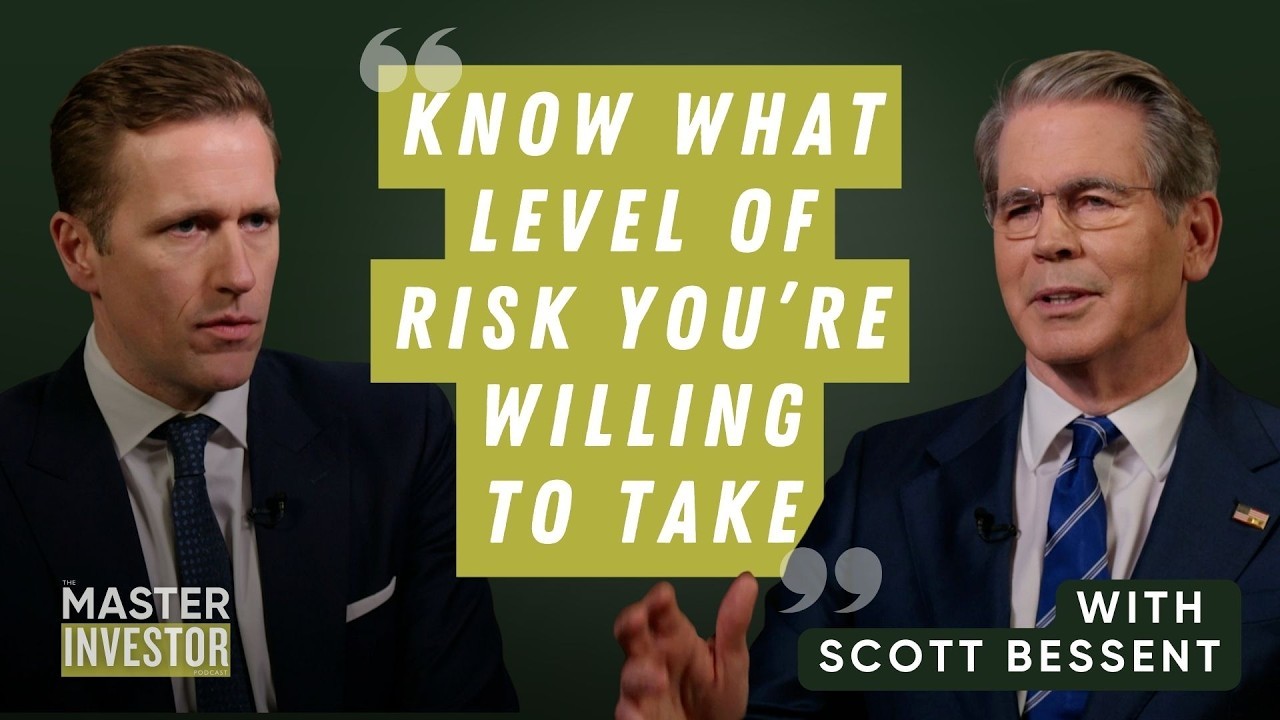
Bessent's variant view is that the Iran conflict is a contained, short-duration event proceeding ahead of schedule that will resolve favorably for the US and potentially lead to a structurally lower oil price regime post-conflict. He believes US relative fiscal strength is actually improving versus peers, that allied coordination remains functional despite surface tensions, and that the Treasury market is operating smoothly with continued strong foreign demand. Most significantly, he signals imminent Navy escort operations through the Strait of Hormuz as soon as air superiority is complete.
Bessent's alternative causality: US energy dominance plus pre-planned strategic reserve coordination plus imminent Strait of Hormuz escort operations equals short-duration supply disruption. Short duration means no embedded inflation expectations, which means Fed retains optionality. Military success plus demonstrated coordination on reserves equals reinforced rather than degraded allied relationships. The debt concern is dismissed via relative comparison to peers rather than absolute levels. The critical difference is his belief that duration, not level, determines economic impact, and his confidence that duration will be brief.
SOURCE OF THE EDGE
Bessent's claimed edge is genuine but narrow. His real informational advantage is access to military planning timelines and operational status, evidenced by his statement that Navy escort operations will begin 'as soon as it is militarily possible' and his confirmation of conversations from the situation room. This is authentic inside information on conflict duration that outside investors cannot access. However, the edge is narrower than his confidence suggests. His certainty about post-conflict oil prices falling below pre-conflict levels is speculation, not information. His dismissal of fiscal concerns via peer comparison is rhetorical framing rather than structural insight. His claim that allied relationships are intact contradicts the evidence of delayed UK cooperation he himself describes. The actionable edge is specifically on conflict timeline and Hormuz reopening timing. His broader macro optimism about US relative strength is advocacy, not analysis.
//
CONVICTION DETECTED
• Absolutely not (on whether America is overextended in Middle East) • There's no chance you could be knocking on the president's door to say we have to pause on this. We can't afford it. Oh, absolutely not. • I would trust my child's life in their hands (on military leadership) • The Iranian mission is proceeding well ahead of schedule • Every day we are moving ahead of plan • Iran is degraded • I don't think we're such a long way from that it's not even worth talking about (on Fed QE scenario) • Not at all (on royal visit cancellation discussions)
//
HEDGE DETECTED
• I think there's a chance we can move to a substantially lower oil price regime over the medium-term • It is my belief that as soon as it is militarily possible the US Navy perhaps with an international coalition will be escorting vessels through • I again I think it's an inevitability (on Russia benefiting) • I don't know (on whether Fed would return to QE) • Once these things go in motion you never know what's going to happen. They take on a life of their own beneath the surface • Is he compliant? Is he injured? (speculation on Ayatollah status) • You never know what's going to happen (career advice, but revealing of worldview) The ratio reveals a speaker who hedges primarily on matters outside his direct control or knowledge (Fed policy, post-conflict oil prices, regime change outcomes) while expressing near-absolute certainty on matters where he has direct information access (military progress, conflict timeline, Treasury market functioning). This pattern is consistent with genuine confidence grounded in actual informational advantage rather than performed certainty. The hedging is appropriately placed on unknowables. Weight should be placed heavily on his conflict timeline statements and Hormuz predictions, but discounted on his macro optimism about allied relationships and fiscal positioning where his certainty exceeds his evidence.