
dstl

TERMINAL

TERMINAL

LIBRARY

LIBRARY

//

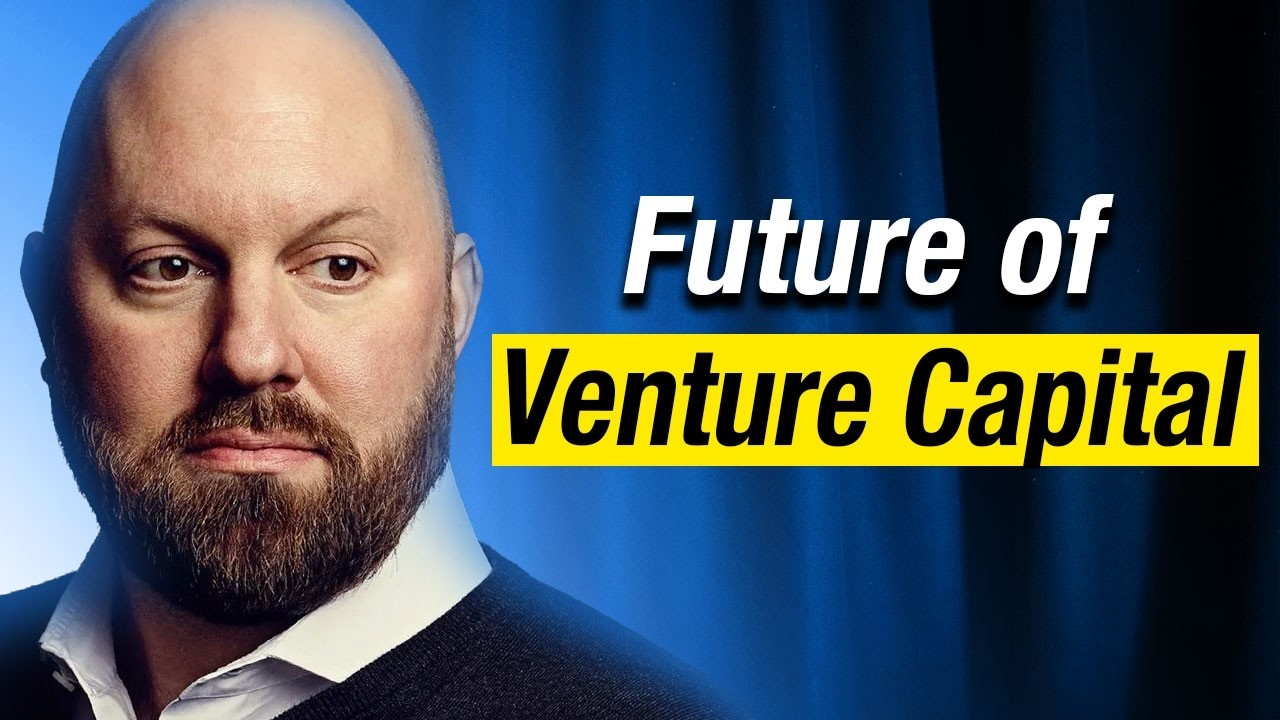
Marc Andreessen on Competing With Yourself, the Omission Mindset, and Why AI Won't Displace Labor

Marc Andreessen on Competing With Yourself, the Omission Mindset, and Why AI Won't Displace Labor

Marc Andreessen on Competing With Yourself, the Omission Mindset, and Why AI Won't Displace Labor

20VC with Harry Stebbings

20VC with Harry Stebbings

1:16:21

1:16:21

15K Views

15K Views

THESIS

Marc Andreessen argues corporate layoffs are being falsely blamed on AI when the real cause is post-COVID overstaffing by 50-75% at most large companies.

Marc Andreessen argues corporate layoffs are being falsely blamed on AI when the real cause is post-COVID overstaffing by 50-75% at most large companies.

Marc Andreessen argues corporate layoffs are being falsely blamed on AI when the real cause is post-COVID overstaffing by 50-75% at most large companies.

ASSET CLASS

ASSET CLASS

SECULAR

SECULAR

CONVICTION

CONVICTION

HIGH

HIGH

TIME HORIZON

TIME HORIZON

Next 5 to 10 years

Next 5 to 10 years

01

01

//

PREMISE

PREMISE

Large companies massively overhired during COVID's zero-rate era and are now using AI as a convenient narrative to justify structural workforce corrections

Large companies massively overhired during COVID's zero-rate era and are now using AI as a convenient narrative to justify structural workforce corrections

Andreessen contends that the combination of zero interest rates and the loss of managerial discipline during virtual work led to an unprecedented hiring binge across large companies. He estimates that essentially every large company is overstaffed — at least by 25%, most by 50%, and many by as much as 75%. When interest rates surged from 0% to 5% at record speed, every company was forced to replan its entire cost structure. The layoffs now being attributed to AI are actually the delayed correction of this overstaffing. Andreessen states he knows this 'for a fact' because he talks to these executives directly, and because AI until literally December was not good enough to perform the jobs being cut. The AI narrative is a 'silver bullet excuse' that provides political cover for workforce reductions that were inevitable regardless of AI's development.

Andreessen contends that the combination of zero interest rates and the loss of managerial discipline during virtual work led to an unprecedented hiring binge across large companies. He estimates that essentially every large company is overstaffed — at least by 25%, most by 50%, and many by as much as 75%. When interest rates surged from 0% to 5% at record speed, every company was forced to replan its entire cost structure. The layoffs now being attributed to AI are actually the delayed correction of this overstaffing. Andreessen states he knows this 'for a fact' because he talks to these executives directly, and because AI until literally December was not good enough to perform the jobs being cut. The AI narrative is a 'silver bullet excuse' that provides political cover for workforce reductions that were inevitable regardless of AI's development.

02

02

//

MECHANISM

MECHANISM

AI as hyperdemocratic productivity amplifier rather than labor replacement — the classical economics rebuttal to zero-sum displacement theory

AI as hyperdemocratic productivity amplifier rather than labor replacement — the classical economics rebuttal to zero-sum displacement theory

Andreessen's mechanism rests on a specific empirical observation: the best coders he knows who now use AI are working more hours, not fewer. AI raises the marginal productivity of individual workers rather than replacing them. He frames the labor displacement narrative as the 'lump of labor fallacy' — classic Marxist zero-sum economics that has been wrong every time a major technology arrived. The forcing function is the hyperdemocratization of AI itself: the best AI in the world is a consumer app downloadable for $20/month (or free), available to 5 billion smartphone users. Every worker — including the social media manager whose job supposedly disappears — now has AI at their fingertips to learn new skills, eliminate grunt work, and move to higher-value tasks. He draws a direct parallel to typewriters replacing pencils, word processors replacing typewriters, and spreadsheets replacing hand accounting. Each wave raised productivity and created entirely new job categories. Furthermore, citing Schumpeterian economics research, approximately 99% of economic value from transformative technologies accrues to users as consumer surplus, not to the companies building the technology. This means the real economic story of AI is the massive diffusion of productivity gains across the global economy, not the capture of value by AI companies or the destruction of existing jobs.

Andreessen's mechanism rests on a specific empirical observation: the best coders he knows who now use AI are working more hours, not fewer. AI raises the marginal productivity of individual workers rather than replacing them. He frames the labor displacement narrative as the 'lump of labor fallacy' — classic Marxist zero-sum economics that has been wrong every time a major technology arrived. The forcing function is the hyperdemocratization of AI itself: the best AI in the world is a consumer app downloadable for $20/month (or free), available to 5 billion smartphone users. Every worker — including the social media manager whose job supposedly disappears — now has AI at their fingertips to learn new skills, eliminate grunt work, and move to higher-value tasks. He draws a direct parallel to typewriters replacing pencils, word processors replacing typewriters, and spreadsheets replacing hand accounting. Each wave raised productivity and created entirely new job categories. Furthermore, citing Schumpeterian economics research, approximately 99% of economic value from transformative technologies accrues to users as consumer surplus, not to the companies building the technology. This means the real economic story of AI is the massive diffusion of productivity gains across the global economy, not the capture of value by AI companies or the destruction of existing jobs.

03

03

//

OUTCOME

OUTCOME

AI expands total addressable markets by moving from software spend into human labor spend, creating larger companies and more productive workers rather than mass unemployment

AI expands total addressable markets by moving from software spend into human labor spend, creating larger companies and more productive workers rather than mass unemployment

The investment implication is that AI's TAM is not constrained to traditional software budgets but expands into the vastly larger pool of human labor spend — meaning the ceiling for AI-native companies is far higher than historical software companies. However, the Schumpeterian dynamic means the overwhelming majority of value (99%+) flows to users as consumer surplus rather than being captured by AI builders. For venture investors, this means the early-stage thesis remains paramount: back exceptional founders at inception because the upside on a $5 million seed check equals the upside on a $500 million growth check. The current layoff cycle is a red herring for AI's economic impact — it is a normalization from COVID-era excess, not evidence of technological displacement. Companies that understand this distinction and use AI to raise per-worker productivity rather than simply cutting headcount will compound advantages. The geographic concentration of AI development in a 20-mile radius of Silicon Valley will persist for the next decade, making proximity to that ecosystem essential for the AI supply side, even as the demand side democratizes globally.

The investment implication is that AI's TAM is not constrained to traditional software budgets but expands into the vastly larger pool of human labor spend — meaning the ceiling for AI-native companies is far higher than historical software companies. However, the Schumpeterian dynamic means the overwhelming majority of value (99%+) flows to users as consumer surplus rather than being captured by AI builders. For venture investors, this means the early-stage thesis remains paramount: back exceptional founders at inception because the upside on a $5 million seed check equals the upside on a $500 million growth check. The current layoff cycle is a red herring for AI's economic impact — it is a normalization from COVID-era excess, not evidence of technological displacement. Companies that understand this distinction and use AI to raise per-worker productivity rather than simply cutting headcount will compound advantages. The geographic concentration of AI development in a 20-mile radius of Silicon Valley will persist for the next decade, making proximity to that ecosystem essential for the AI supply side, even as the demand side democratizes globally.

//

NECESSARY CONDITION

Regulatory frameworks must remain permissive to innovation (avoiding the 'European' model) and open source development must remain unencumbered by downstream liability.

Essentially, every large company is overstaffed. It's at least overstaffed by 25%. I think most large companies are overstaffed by 50%. I think a lot of them are overstaffed by 75%.

Essentially, every large company is overstaffed. It's at least overstaffed by 25%. I think most large companies are overstaffed by 50%. I think a lot of them are overstaffed by 75%.

62:30

RISK

Steel Man Counter-Thesis

The strongest counter-thesis to Andreessen's framework is that his firm has structurally positioned itself to capture diminishing returns at increasing scale, while his philosophical framework prevents him from recognizing this. First, his own Schumpeterian analysis demonstrates that AI companies will capture a vanishingly small share of the value they create — yet the firm continues to scale AUM as if capture rates are stable. Second, his omission-minimization philosophy, when adopted industry-wide (as it increasingly is), transforms from a competitive edge into a consensus trap that guarantees inflated entry prices across the entire venture market. Third, the 'back great founders regardless of other factors' heuristic is explicitly acknowledged as tautological ('we define great founders as the ones that have great outcomes'), meaning the framework lacks predictive power and retrospectively rationalizes whatever happened. Fourth, the geographic hyper-concentration he describes as bullish is actually the single largest correlated risk factor across his entire portfolio — one that California's political class has repeatedly demonstrated willingness to exploit through regulation. Fifth, and most fundamentally, the labor productivity thesis ('AI won't displace workers, it makes them more productive') relies on a classical economics framework that may not hold when AI reaches human-level capability across cognitive tasks. Andreessen dismisses the labor displacement concern as 'the lump of labor fallacy' and attributes current layoffs entirely to post-COVID overhiring and interest rate normalization. But the counter-evidence is that corporate leaders themselves are explicitly citing AI as the rationale for permanent headcount reduction, and Andreessen's own admission that companies are 50-75% overstaffed suggests that the 'natural' headcount these firms converge to will be structurally lower than pre-COVID levels — with AI enabling the maintenance of output with fewer workers. If this structural labor reduction materializes, the political backlash could directly threaten the regulatory environment in which his portfolio companies operate, creating a feedback loop between his productivity thesis and his geographic concentration risk.

//

RISK 01

RISK 01

AI Value Capture Inversion: The 99% Consumer Surplus Thesis Undermines Andreessen's Own Portfolio Returns

AI Value Capture Inversion: The 99% Consumer Surplus Thesis Undermines Andreessen's Own Portfolio Returns

THESIS

Andreessen articulates a Schumpeterian framework where 99%+ of AI economic value accrues to consumers as surplus rather than to the companies building AI. This creates a fundamental tension with his core investment thesis. If Andreessen Horowitz is deploying $15+ billion into AI companies that will collectively capture only ~1% of the value they create, the firm is betting that the absolute size of the AI market is so enormous that 1% still yields venture-scale returns. However, this framework also implies that the moats around AI companies are inherently weak — if value constantly leaks to consumers, margin compression is structural and permanent. The historical analogy to the internet is instructive but cuts both ways: while Google and Apple captured enormous value, thousands of internet companies were destroyed precisely because consumer surplus dynamics made it impossible to charge enough. The risk is that the AI application layer becomes even more commoditized than internet applications, especially as open-source models proliferate and the frontier models converge in capability, leaving Andreessen's portfolio companies fighting over an ever-thinner slice of captured value.

Andreessen articulates a Schumpeterian framework where 99%+ of AI economic value accrues to consumers as surplus rather than to the companies building AI. This creates a fundamental tension with his core investment thesis. If Andreessen Horowitz is deploying $15+ billion into AI companies that will collectively capture only ~1% of the value they create, the firm is betting that the absolute size of the AI market is so enormous that 1% still yields venture-scale returns. However, this framework also implies that the moats around AI companies are inherently weak — if value constantly leaks to consumers, margin compression is structural and permanent. The historical analogy to the internet is instructive but cuts both ways: while Google and Apple captured enormous value, thousands of internet companies were destroyed precisely because consumer surplus dynamics made it impossible to charge enough. The risk is that the AI application layer becomes even more commoditized than internet applications, especially as open-source models proliferate and the frontier models converge in capability, leaving Andreessen's portfolio companies fighting over an ever-thinner slice of captured value.

DEFENSE

Andreessen acknowledges the 99% consumer surplus dynamic but never reconciles it with his own firm's investment strategy. He pivots to saying the fight over the remaining 1% is 'a very important question' and 'central to what we do' but the interviewer redirects to TAM expansion before he can address how portfolio companies will actually defend margins. The implicit defense — that TAMs will expand so dramatically that even 1% is enormous — is asserted but not stress-tested against the counterfactual where AI commoditization is faster than market expansion.

Andreessen acknowledges the 99% consumer surplus dynamic but never reconciles it with his own firm's investment strategy. He pivots to saying the fight over the remaining 1% is 'a very important question' and 'central to what we do' but the interviewer redirects to TAM expansion before he can address how portfolio companies will actually defend margins. The implicit defense — that TAMs will expand so dramatically that even 1% is enormous — is asserted but not stress-tested against the counterfactual where AI commoditization is faster than market expansion.

//

RISK 02

RISK 02

The Omission Bias Paradox: Systematic Overpayment Risk Disguised as Conviction

The Omission Bias Paradox: Systematic Overpayment Risk Disguised as Conviction

THESIS

Andreessen's entire investment philosophy is organized around minimizing errors of omission over errors of commission. He explicitly states that 'every time we passed on a promising venture company over price, I think it's been a mistake' and advises against 'diamonds in the rough' in favor of backing obvious winners. While this philosophy is powerful in power-law venture environments, it creates a systematic bias toward overpayment and consensus investing that becomes increasingly dangerous as AI round sizes inflate. If every top-tier firm adopts the same 'never pass on price' philosophy — which Andreessen is effectively evangelizing publicly — the result is a reflexive price spiral where the signal of 'hotly competed deal' becomes self-reinforcing rather than informative. The omission-minimization framework also creates an unfalsifiable loop: any missed deal retroactively validates the philosophy, while overpaid deals that underperform are attributed to execution rather than entry price. At scale ($90B+ AUM), the firm's own capital deployment materially inflates the valuations it then cites as evidence that price doesn't matter, creating a circular justification.

Andreessen's entire investment philosophy is organized around minimizing errors of omission over errors of commission. He explicitly states that 'every time we passed on a promising venture company over price, I think it's been a mistake' and advises against 'diamonds in the rough' in favor of backing obvious winners. While this philosophy is powerful in power-law venture environments, it creates a systematic bias toward overpayment and consensus investing that becomes increasingly dangerous as AI round sizes inflate. If every top-tier firm adopts the same 'never pass on price' philosophy — which Andreessen is effectively evangelizing publicly — the result is a reflexive price spiral where the signal of 'hotly competed deal' becomes self-reinforcing rather than informative. The omission-minimization framework also creates an unfalsifiable loop: any missed deal retroactively validates the philosophy, while overpaid deals that underperform are attributed to execution rather than entry price. At scale ($90B+ AUM), the firm's own capital deployment materially inflates the valuations it then cites as evidence that price doesn't matter, creating a circular justification.

DEFENSE

Andreessen partially addresses this by distinguishing early-stage from growth-stage investing, noting that entry price 'definitely matters in particular as the company grows in size.' He also warns about the operational danger of overfunding (Don Valentine's 'indigestion vs. starvation' principle) and the structural risk of setting valuation posts too high for future rounds. However, his caveat that this advice applies mainly to growth while at the seed/venture level 'every time we passed over price it's been a mistake' leaves the early-stage overpayment risk largely unhedged. The defense is partial — he acknowledges the mechanics of the problem but exempts his core investment domain from the concern.

Andreessen partially addresses this by distinguishing early-stage from growth-stage investing, noting that entry price 'definitely matters in particular as the company grows in size.' He also warns about the operational danger of overfunding (Don Valentine's 'indigestion vs. starvation' principle) and the structural risk of setting valuation posts too high for future rounds. However, his caveat that this advice applies mainly to growth while at the seed/venture level 'every time we passed over price it's been a mistake' leaves the early-stage overpayment risk largely unhedged. The defense is partial — he acknowledges the mechanics of the problem but exempts his core investment domain from the concern.

//

RISK 03

RISK 03

Geographic Concentration as Single Point of Failure for Portfolio and Talent Pipeline

Geographic Concentration as Single Point of Failure for Portfolio and Talent Pipeline

THESIS

Andreessen asserts that AI has re-centralized the tech industry into a 20-mile radius of his office more intensely than at any point in Silicon Valley's history. While he frames this as bullish for his firm's deal flow, it represents an enormous concentration risk that he does not address. A single regulatory regime (California), a single geopolitical jurisdiction (US), a single housing market, and a single cultural ecosystem now contain virtually all of the firm's core talent pipeline and portfolio company operations. Any exogenous shock to this cluster — whether California-specific regulation (AI safety bills, employment law), a major earthquake, federal policy shifts, immigration restriction, or a breakthrough in remote AI development infrastructure — could simultaneously impair deal flow, talent availability, and portfolio company operations. The historical analogy is the UK financial services concentration in London pre-Brexit: geographic clustering creates enormous efficiency gains until the political or structural environment shifts, at which point the lack of diversification becomes catastrophic. Andreessen himself notes California's hostile business environment and voter base, yet draws no connection to the portfolio risk this creates.

Andreessen asserts that AI has re-centralized the tech industry into a 20-mile radius of his office more intensely than at any point in Silicon Valley's history. While he frames this as bullish for his firm's deal flow, it represents an enormous concentration risk that he does not address. A single regulatory regime (California), a single geopolitical jurisdiction (US), a single housing market, and a single cultural ecosystem now contain virtually all of the firm's core talent pipeline and portfolio company operations. Any exogenous shock to this cluster — whether California-specific regulation (AI safety bills, employment law), a major earthquake, federal policy shifts, immigration restriction, or a breakthrough in remote AI development infrastructure — could simultaneously impair deal flow, talent availability, and portfolio company operations. The historical analogy is the UK financial services concentration in London pre-Brexit: geographic clustering creates enormous efficiency gains until the political or structural environment shifts, at which point the lack of diversification becomes catastrophic. Andreessen himself notes California's hostile business environment and voter base, yet draws no connection to the portfolio risk this creates.

DEFENSE

Andreessen extensively catalogs Silicon Valley's problems — cost of living, hostile politics, quality of life issues, San Francisco's anti-growth voter base — but treats these as irritants rather than systemic risks. He acknowledges his earlier optimism about decentralization was wrong and that AI has reversed it, but frames this purely as a descriptive observation rather than a risk factor. He mentions portfolio exceptions like 11 Labs and Black Forest Labs but positions them as outliers confirming the rule rather than as strategic hedges. The blind spot is that he simultaneously holds two incompatible views: (1) Northern California has deep structural problems and (2) near-total concentration in Northern California is the natural and acceptable state of affairs for AI. No mitigation strategy is discussed.

Andreessen extensively catalogs Silicon Valley's problems — cost of living, hostile politics, quality of life issues, San Francisco's anti-growth voter base — but treats these as irritants rather than systemic risks. He acknowledges his earlier optimism about decentralization was wrong and that AI has reversed it, but frames this purely as a descriptive observation rather than a risk factor. He mentions portfolio exceptions like 11 Labs and Black Forest Labs but positions them as outliers confirming the rule rather than as strategic hedges. The blind spot is that he simultaneously holds two incompatible views: (1) Northern California has deep structural problems and (2) near-total concentration in Northern California is the natural and acceptable state of affairs for AI. No mitigation strategy is discussed.

//

ASYMMETRIC SKEW

The upside case is that AI TAMs expand by 10-100x, making even small value capture percentages yield historic returns on a $90B+ AUM base, with Andreessen's brand, network, and philosophy continuing to attract the best founders in the most concentrated geography in history. The downside case is a convergence of three correlated risks: (1) AI model commoditization compresses margins faster than TAMs expand, validating the 99% consumer surplus thesis against portfolio returns; (2) the omission-minimization philosophy at massive scale systematically overpays during a period of peak AI hype, creating vintage-year impairment; and (3) geographic and regulatory concentration in California creates a correlated shock vector across the entire portfolio. The asymmetry is unfavorable on a risk-adjusted basis because the three downside risks are correlated with each other — commodity AI, overpayment in a hype cycle, and regulatory backlash from labor displacement all intensify simultaneously in a slowdown scenario — while the upside case requires all three risks to remain dormant concurrently. The skew is approximately 3:1 downside-to-upside on a probability-weighted basis for the current vintage, though the franchise value of the firm provides a floor that limits permanent capital impairment.

ALPHA

NOISE

The Consensus

The market broadly believes that AI will cause significant labor displacement, that the venture capital industry is fragmenting geographically (post-COVID decentralization), that wealth inequality driven by technology is at historic highs and worsening, that current corporate layoffs are primarily AI-driven, that high entry valuations at seed/early stage are structurally problematic for returns, and that Europe can find an alternative path to building a competitive tech ecosystem without adopting the full Silicon Valley playbook. The consensus also holds that AI value will accrue disproportionately to the companies building foundational AI models, and that venture firms must choose between boutique early-stage craft and scaled multi-stage platforms.

The market's causal logic: AI automates tasks → workers are displaced → layoffs increase → inequality widens → value concentrates in AI model builders. Separately: high valuations at early stage compress returns → disciplined pricing matters more than access. Geographic decentralization via remote work → talent and startups distribute globally → Silicon Valley's dominance erodes. Europe can develop alternative innovation ecosystems through incremental policy adjustments without full structural reform.

SIGNAL

The Variant

Andreessen believes the tech industry is re-centralizing in Silicon Valley more intensely than at any point in its history, driven specifically by AI — directly contradicting the post-COVID decentralization narrative. He argues labor displacement from AI is '100% incorrect' and a classic lump of labor fallacy; that current layoffs are entirely attributable to post-COVID overstaffing (25-75% at most large companies) and the interest rate shock from 0% to 5%, not AI — with AI serving merely as a convenient excuse. He contends wealth inequality is far below historical norms (feudalism, slavery) and that AI is the most 'hyperdemocratic' technology ever created, with ~99%+ of economic value accruing to users as consumer surplus rather than to AI companies. On venture specifically, he argues that passing on promising companies over price has always been a mistake, that 'diamonds in the rough' almost never work (only diamonds work), and that a $5M seed check and a $500M growth check have identical upside potential — making the scaled multi-stage model fully compatible with early-stage craft. He believes Europe knows exactly what policy reforms are needed (citing the Draghi report) but consistently refuses to implement them, and that there is no 'Option B.'

Andreessen's causal logic diverges at nearly every node. His chain: AI raises individual marginal productivity → workers become more capable, not displaced → demand for higher-value work expands → new job categories emerge (as social media manager didn't exist pre-internet). Layoffs are caused by: zero interest rates → COVID overhiring binge (loss of discipline in virtual workplaces) → rate shock to 5% → forced financial replanning → headcount correction. AI is post-hoc rationalization, not cause, because AI was not functionally capable of replacing those roles until very recently (December or later). On concentration: AI requires density of talent, capital, and institutional knowledge → network effects pull the industry back to a 20-mile radius of his location → geographic concentration intensifies rather than disperses. On venture economics: the mistake of omission dominates the mistake of commission → the cost of missing Google dwarfs the cost of losing $10M → therefore passing on a deal over price is almost always wrong at seed stage. On Europe: the policy answers are fully known (Draghi report) → political courage is the binding constraint, not knowledge → the conversation always terminates at 'we can't do those things' → no alternative path exists. On value distribution: Schumpeterian economics dictates ~99% of technology value becomes consumer surplus → fighting over the 1% captured by AI companies is important but dwarfed by the democratized benefit → this undermines the narrative that AI model companies will capture most of the value.

SOURCE OF THE EDGE

Andreessen's claimed edge rests on three pillars: (1) direct operational access — he sits on the boards of companies like Meta, talks directly to CEOs making layoff decisions, and has firsthand knowledge that AI is being used as a pretext rather than a genuine cause ('I know this for a fact because I talked to them'); (2) pattern recognition across 30+ years spanning multiple technology cycles (internet search skepticism in the 1990s, AI investment failures from 1945-2017, the COVID hiring binge); and (3) institutional positioning at the nexus of capital allocation, where he sees deal flow, founder behavior, and LP sentiment simultaneously. The first pillar — direct CEO conversations about layoff motivations — is a genuine and credible informational advantage. No outside analyst or macro commentator has this access, and it produces a falsifiable, specific claim (companies are overstaffed 25-75%, AI was not functionally capable of replacing those roles until December). The second pillar — historical pattern recognition — is credible but not proprietary; anyone can study these cycles. The third pillar is structural and real but also creates a bias: running a $90B+ firm that needs to deploy capital at scale creates an inherent incentive to argue that passing on deals over price is always wrong, that concentration in Silicon Valley benefits his firm's geographic monopoly on deal flow, and that AI will not displace labor (which would threaten the startup ecosystem he funds). His dismissal of labor displacement as '100% incorrect' and a 'classic' fallacy is stated with a certainty that exceeds what the evidence supports at this stage of AI capability development — we are genuinely in uncharted territory with reasoning models and agentic AI, and his historical analogies (typewriter to word processor) may not hold when the technology can perform cognitive, not just mechanical, augmentation. The edge on the layoff causation question is real and credible. The edge on the broader labor displacement question is a confident extrapolation from historical pattern that may prove correct but is being presented with more certainty than the novelty of the situation warrants. His geographic concentration thesis is credible and backed by observable capital flows but also self-serving. Overall: partially genuine structural advantage, partially narrative construction that aligns with his firm's economic interests.

//

CONVICTION DETECTED

• This entire labor displacement thing is 100% incorrect. It's completely wrong. • It's classic zero sum economics. It's the lump of labor fallacy. It happens over and over and over again. It's always been wrong. It's going to be wrong again. • I think the tech industry is more centralized in Silicon Valley than it has been in its entire existence. And I think it's AI. • Something very close to 100% of the quality AI companies are in California and specifically in a 20 mile radius of where I'm sitting right now. • I think every time we passed on a promising venture company over price, I think it's been a mistake. • Don't ever do diamonds in the rough, only do diamonds. • I know this for a fact because number one, I talked to them. • Nobody ever does lock box. • It's at least overstaffed by 25%. I think most large companies are overstaffed by 50%. I think a lot of them are overstaffed by 75%. • There's nothing that we're missing today that we could solve by going public. • More companies die from indigestion than from starvation. • Life just gets a lot simpler if you just assume everything is your own fault.

//

HEDGE DETECTED

• I would never rule anything out. • There are exceptions, and 11 Labs of course is one of the big exceptions. • Having said that, some of the best founders in history have no trace of trauma in their background that I can tell. • I think there's something to that — used repeatedly as a soft qualifier before making claims about founder psychology and motivation. • Having said that, it's like when the new thing appears... • I think in the last two years I think that process has like whiplash reversed — double 'I think' softening. • I'm a lot more optimistic than I was 2 years ago. I'm a lot less optimistic than I was 20 years ago. • I don't know whether that's encouraging or discouraging. • And by the way, the free ones are pretty good now — hedging on the inequality/access point. • Maybe a little bit less so in Europe, but I think still more than not. • I think if you spend enough time with people you can get a sense — qualifying the founder detection framework. • We've never hit the catalyst moment where we've pulled the trigger on either one — hedging on public equity and credit products. The ratio of conviction to hedging here is heavily skewed toward conviction. Andreessen hedges on peripheral or secondary points — exceptions to geographic concentration, nuances of founder psychology, whether Europe is slightly different — but on his core macro claims (labor displacement is wrong, Silicon Valley is re-centralizing, omission errors dominate, layoffs are not AI-driven), he uses absolute, unqualified language. This is consistent with a speaker who has genuinely high internal confidence on his primary theses and is not performing certainty for effect. The hedging occurs precisely where you would expect a sophisticated thinker to acknowledge complexity (founder assessment is imperfect, the future is uncertain in specific domains). However, the total absence of hedging on the labor displacement claim — despite it being the most genuinely uncertain of his positions given the unprecedented nature of current AI capabilities — suggests that on this specific point, conviction may be partially performative or influenced by positional bias. His firm's entire economic model depends on startups creating value through human-led innovation; acknowledging that AI might fundamentally displace labor would undermine that model. Weight his geographic concentration and layoff causation theses heavily; weight his absolute dismissal of labor displacement with more caution.