
dstl

TERMINAL

TERMINAL

LIBRARY

LIBRARY

//

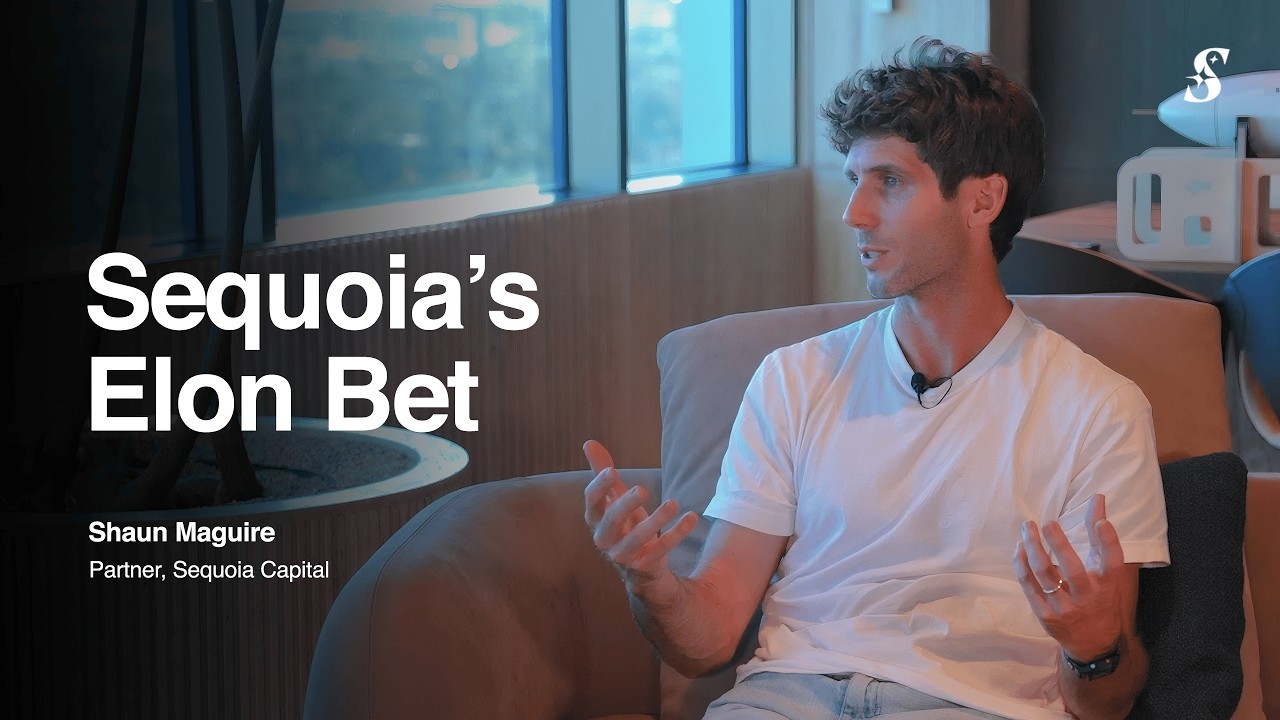
How Elon Builds Trillion-Dollar Companies

How Elon Builds Trillion-Dollar Companies

How Elon Builds Trillion-Dollar Companies

Jan 28, 2026

Jan 28, 2026

Sourcery with Molly O'Shea

Sourcery with Molly O'Shea

42:54

42:54

8K Views

8K Views

THESIS

SpaceX is evolving from a launch provider into a vertically integrated global infrastructure utility, utilizing Starship's upcoming excess capacity to dominate new high-margin markets like direct-to-cell connectivity and space-based data centers.

SpaceX is evolving from a launch provider into a vertically integrated global infrastructure utility, utilizing Starship's upcoming excess capacity to dominate new high-margin markets like direct-to-cell connectivity and space-based data centers.

SpaceX is evolving from a launch provider into a vertically integrated global infrastructure utility, utilizing Starship's upcoming excess capacity to dominate new high-margin markets like direct-to-cell connectivity and space-based data centers.

ASSET CLASS

ASSET CLASS

SECULAR

SECULAR

CONVICTION

CONVICTION

HIGH

HIGH

TIME HORIZON

TIME HORIZON

2026 to 2029

2026 to 2029

01

01

//

PREMISE

PREMISE

Vertical Integration and Launch Reusability

Vertical Integration and Launch Reusability

SpaceX has successfully navigated the bottleneck of Falcon 9 reusability, creating a vertically integrated manufacturing machine that moves with unmatched speed and flexibility. This operational foundation has positioned the company to shift focus from merely accessing space to utilizing massive upcoming launch capacity for proprietary infrastructure rather than just third-party delivery.

SpaceX has successfully navigated the bottleneck of Falcon 9 reusability, creating a vertically integrated manufacturing machine that moves with unmatched speed and flexibility. This operational foundation has positioned the company to shift focus from merely accessing space to utilizing massive upcoming launch capacity for proprietary infrastructure rather than just third-party delivery.

02

02

//

MECHANISM

MECHANISM

Starship Capacity Meets Terrestrial AI Constraints

Starship Capacity Meets Terrestrial AI Constraints

The imminent reliable reusability of Starship (expected around 2026) will generate massive excess launch supply. SpaceX is deploying this surplus capacity to solve terrestrial bottlenecks—specifically the power and regulatory limits constraining AI compute—by building data centers in space and expanding the Starlink network to include ubiquitous direct-to-cell capabilities.

The imminent reliable reusability of Starship (expected around 2026) will generate massive excess launch supply. SpaceX is deploying this surplus capacity to solve terrestrial bottlenecks—specifically the power and regulatory limits constraining AI compute—by building data centers in space and expanding the Starlink network to include ubiquitous direct-to-cell capabilities.

03

03

//

OUTCOME

OUTCOME

Historic Valuation Expansion

Historic Valuation Expansion

The company transcends the limited global launch market (approximately $6 billion) to capture trillion-dollar markets in telecommunications and compute. This transition underpins the belief that SpaceX is the 'greatest company of all time' and represents the healthiest wealth creation event in history ahead of its upcoming IPO.

The company transcends the limited global launch market (approximately $6 billion) to capture trillion-dollar markets in telecommunications and compute. This transition underpins the belief that SpaceX is the 'greatest company of all time' and represents the healthiest wealth creation event in history ahead of its upcoming IPO.

//

NECESSARY CONDITION

Starship must achieve reliable reusability and flight cadence by 2026 to generate the required excess capacity.

The combination of excess supply, launch supply coming online with Starship married with this extreme urgent painpoint on Earth got the company thinking very seriously around like can we actually do data centers in space?

The combination of excess supply, launch supply coming online with Starship married with this extreme urgent painpoint on Earth got the company thinking very seriously around like can we actually do data centers in space?

04:58

RISK

Steel Man Counter-Thesis

SpaceX's valuation (currently ~$180B+, implied much higher by the speaker) assumes successful entry into entirely new asset classes (Cellular, Data Centers). If Starship is delayed or the economics of space-based compute fail to materialize, the company reverts to being a launch provider in a capped ~$6B global market and a rural ISP with distinct bandwidth ceilings in high-value urban zones.

//

RISK 01

RISK 01

Starship Execution & Capacity Timing

Starship Execution & Capacity Timing

THESIS

The entire strategic pivot to 'excess capacity' businesses (Data Centers, massive Starlink expansion) relies heavily on Starship achieving reliable reusability specifically within the 2026 window. If Starship faces technical delays, the projected 'excess' launch supply vanishes, stalling the deployment of the high-margin infrastructure needed to justify the valuation.

The entire strategic pivot to 'excess capacity' businesses (Data Centers, massive Starlink expansion) relies heavily on Starship achieving reliable reusability specifically within the 2026 window. If Starship faces technical delays, the projected 'excess' launch supply vanishes, stalling the deployment of the high-margin infrastructure needed to justify the valuation.

DEFENSE

The speaker claims internal confidence is high that Starship will be flying reliably and reusably in 2026, creating surplus capacity by 2028-2029.

The speaker claims internal confidence is high that Starship will be flying reliably and reusably in 2026, creating surplus capacity by 2028-2029.

//

RISK 02

RISK 02

Physics-Based Density Limits (Bandwidth Saturation)

Physics-Based Density Limits (Bandwidth Saturation)

THESIS

The Direct-to-Cell and consumer Starlink models face inherent physical limitations in dense urban environments. Unlike terrestrial towers, satellites cannot easily service high-density populations, potentially capping the total addressable market to rural areas and travelers.

The Direct-to-Cell and consumer Starlink models face inherent physical limitations in dense urban environments. Unlike terrestrial towers, satellites cannot easily service high-density populations, potentially capping the total addressable market to rural areas and travelers.

DEFENSE

SpaceX explicitly targets 'excess bandwidth capacity in remote areas' while partnering with terrestrial carriers (like T-Mobile) to handle dense urban coverage, positioning the service as complementary rather than a total replacement in cities.

SpaceX explicitly targets 'excess bandwidth capacity in remote areas' while partnering with terrestrial carriers (like T-Mobile) to handle dense urban coverage, positioning the service as complementary rather than a total replacement in cities.

//

RISK 03

RISK 03

Unverified Economics of Space Data Centers

Unverified Economics of Space Data Centers

THESIS

The thesis pivots significantly to 'Data Centers in Space' as a solution to terrestrial AI power constraints. This is an unproven market with complex 'micro' economics (thermal management, radiation, latency) that the public and broader market have not yet validated.

The thesis pivots significantly to 'Data Centers in Space' as a solution to terrestrial AI power constraints. This is an unproven market with complex 'micro' economics (thermal management, radiation, latency) that the public and broader market have not yet validated.

DEFENSE

The speaker admits he was initially skeptical of the 'micro' math but claims to have now personally 'done the math' and found it compelling, though he acknowledges the public has not yet seen the full argument.

The speaker admits he was initially skeptical of the 'micro' math but claims to have now personally 'done the math' and found it compelling, though he acknowledges the public has not yet seen the full argument.

//

ASYMMETRIC SKEW

Asymmetry is heavily skewed to the upside (10x-100x via new markets), but with a high capital-intensive floor if they remain merely a launch monopoly.

ALPHA

NOISE

The Consensus

SpaceX is primarily a launch provider and satellite ISP operating within a capped global launch market (approx. $6B in 2019) and a competitive telecommunications sector, where valuation is constrained by high capital expenditures and physics-based coverage limitations.

Valuation is derived from capturing a percentage of the existing launch market and rural internet subscribers. Growth is linear and constrained by the number of launches and satellite slots.

SIGNAL

The Variant

SpaceX is the 'greatest company of all time' and a vertically integrated infrastructure monopoly that is barely getting started. It is transitioning from a launch company to a global utility for compute (Space Data Centers) and ubiquitous connectivity (Direct-to-Cell), driven by massive excess capacity from Starship.

Elon Musk builds companies by accumulating 'potential energy' (long periods of capex/R&D with zero revenue) and converting it suddenly into 'kinetic energy' (massive scale). The 'bottleneck' of launch capacity is about to flip into an 'excess supply' via Starship (2026), forcing the creation of new, high-margin internal markets like space-based AI compute to utilize that surplus.

SOURCE OF THE EDGE

Privileged access as a major early investor ($1.2B deployed), direct observation of engineering culture (Starbase/Hawthorne visits), and proprietary internal analysis ('doing the math') on the economics of space data centers that the public has not yet seen.

//

CONVICTION DETECTED

• I personally believe SpaceX is the greatest company of all time • I think the company is just getting started • I can say I have now done the math and I think it's going to be absolutely giant • This is the healthiest wealth creation event in history • 100%. [Elon is] only gets like 10% of the appreciation he deserves • I'm maximum bullish on all of Elon's companies

//

HEDGE DETECTED

• Hopefully in the IPO it's worth a lot more than that • I don't know exactly when the space data centers will start • I'm not sure if it's the right micro (past view) • I would say in 2019 • That's my personal opinion • I don't I may know too much here