
dstl

TERMINAL

TERMINAL

LIBRARY

LIBRARY

//

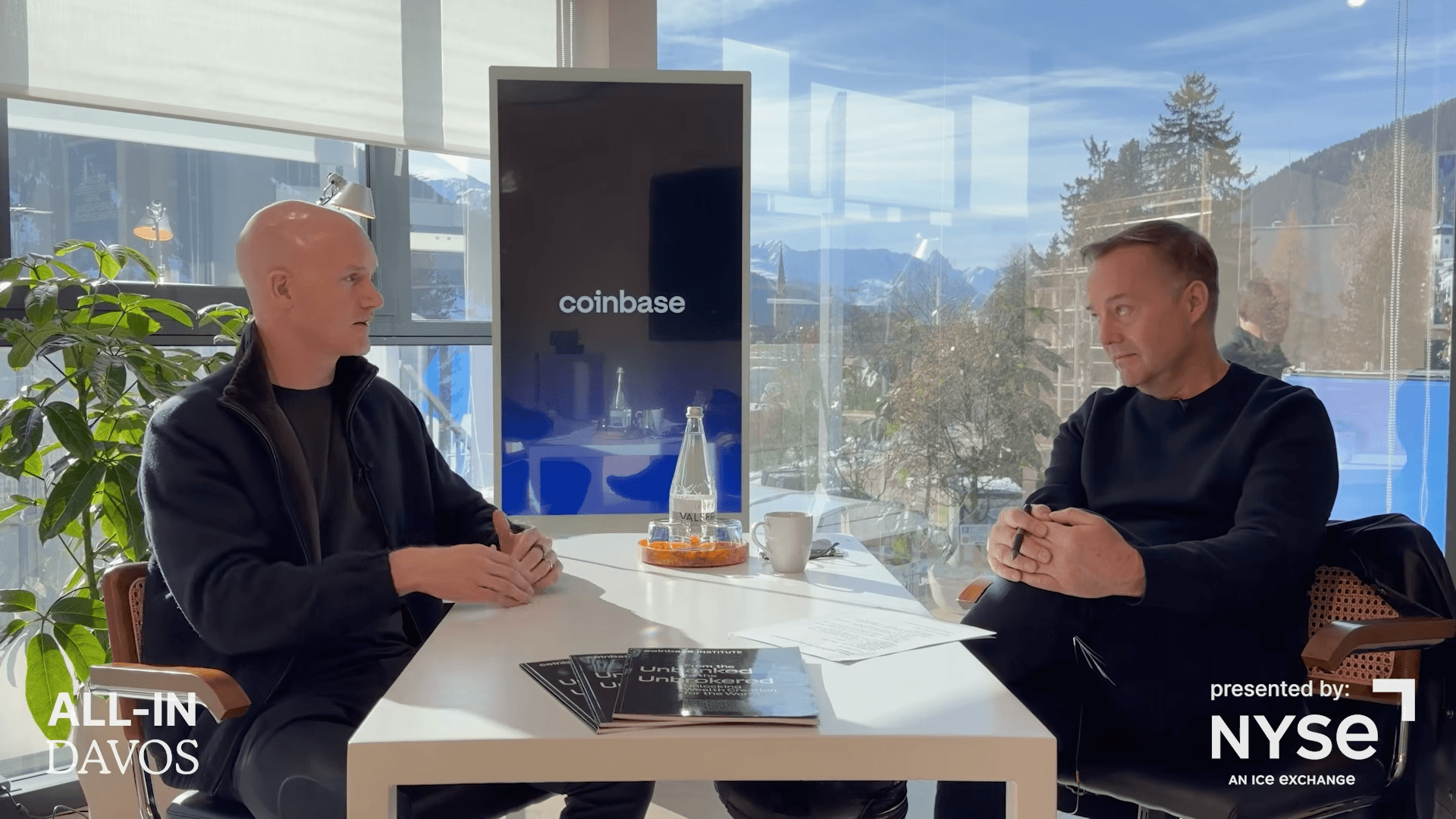
Coinbase CEO, Brian Armstrong on Crypto Adoption

Coinbase CEO, Brian Armstrong on Crypto Adoption

Coinbase CEO, Brian Armstrong on Crypto Adoption

Jan 23, 2026

Jan 23, 2026

All-In Podcast

All-In Podcast

38:52

38:52

94K Views

94K Views

THESIS

Regulatory clarity via the 'Genius Act' and institutional adoption by major banks will transition global finance to on-chain infrastructure, establishing crypto as the 'Everything Exchange' for all asset classes.

Regulatory clarity via the 'Genius Act' and institutional adoption by major banks will transition global finance to on-chain infrastructure, establishing crypto as the 'Everything Exchange' for all asset classes.

Regulatory clarity via the 'Genius Act' and institutional adoption by major banks will transition global finance to on-chain infrastructure, establishing crypto as the 'Everything Exchange' for all asset classes.

ASSET CLASS

ASSET CLASS

SECULAR

SECULAR

CONVICTION

CONVICTION

HIGH

HIGH

TIME HORIZON

TIME HORIZON

Secular (Multi-year, ongoing 2026+)

Secular (Multi-year, ongoing 2026+)

01

01

//

PREMISE

PREMISE

Institutional Integration Meets Regulatory Clarity

Institutional Integration Meets Regulatory Clarity

The U.S. regulatory environment has shifted from hostile to supportive, evidenced by the new administration's focus on clear rules. Simultaneously, major financial institutions, including five of the top 20 global banks and asset managers like BlackRock, are building crypto infrastructure, viewing blockchain adoption as an existential necessity rather than a speculative threat.

The U.S. regulatory environment has shifted from hostile to supportive, evidenced by the new administration's focus on clear rules. Simultaneously, major financial institutions, including five of the top 20 global banks and asset managers like BlackRock, are building crypto infrastructure, viewing blockchain adoption as an existential necessity rather than a speculative threat.

02

02

//

MECHANISM

MECHANISM

The 'Genius Act' and Stablecoin Standardization

The 'Genius Act' and Stablecoin Standardization

The passage of the 'Genius Act' mandates 100% short-term U.S. treasury reserves for regulated stablecoins, effectively eliminating bank-run risks and removing the need for fractional reserve banking licenses in this sector. This legislative framework provides the safety and clarity required for institutions to migrate assets on-chain and for stablecoins to scale as a settlement layer.

The passage of the 'Genius Act' mandates 100% short-term U.S. treasury reserves for regulated stablecoins, effectively eliminating bank-run risks and removing the need for fractional reserve banking licenses in this sector. This legislative framework provides the safety and clarity required for institutions to migrate assets on-chain and for stablecoins to scale as a settlement layer.

03

03

//

OUTCOME

OUTCOME

The 'Everything Exchange'

The 'Everything Exchange'

Crypto infrastructure evolves beyond native tokens to become the universal settlement layer for all finance. This results in the mass tokenization of real-world assets, including private funds and equities, and the dominance of stablecoins for B2B cross-border payments, significantly increasing global liquidity and democratizing access to wealth creation.

Crypto infrastructure evolves beyond native tokens to become the universal settlement layer for all finance. This results in the mass tokenization of real-world assets, including private funds and equities, and the dominance of stablecoins for B2B cross-border payments, significantly increasing global liquidity and democratizing access to wealth creation.

//

NECESSARY CONDITION

The 'Genius Act' must remain the law of the land without being undermined by banking trade groups attempting to re-trade the deal.

I think the biggest trends happening in crypto right now is number one it's the everything exchange. So it's not just crypto you can trade um you're getting equities you know are increasingly getting closer to being able to trade uh onchain.

I think the biggest trends happening in crypto right now is number one it's the everything exchange. So it's not just crypto you can trade um you're getting equities you know are increasingly getting closer to being able to trade uh onchain.

15:01

RISK

Steel Man Counter-Thesis

While the regulatory path seems clear, the 'Genius Act' is fragile. The existential threat stablecoins pose to the traditional banking business model guarantees a fierce, sustained lobbying effort to 're-trade' the deal. If successful, incumbents could capture the crypto infrastructure, relegating firms like Coinbase to low-margin utility providers or forcing them out of the payments layer entirely.

//

RISK 01

RISK 01

Banking Sector Legislative Retrading

Banking Sector Legislative Retrading

THESIS

Incumbent banks, viewing stablecoins as a disruptive competitor to their deposit franchises and fractional reserve lending models, utilize their political capital to repeal or significantly alter the 'Genius Act' to stifle non-bank issuers.

Incumbent banks, viewing stablecoins as a disruptive competitor to their deposit franchises and fractional reserve lending models, utilize their political capital to repeal or significantly alter the 'Genius Act' to stifle non-bank issuers.

DEFENSE

Armstrong acknowledges that bank trade groups are actively trying to undo the legislation. He defends against this by framing the Act as established 'law of the land' that cannot easily be reversed and noting that progressive banks are choosing to partner/integrate rather than fight.

Armstrong acknowledges that bank trade groups are actively trying to undo the legislation. He defends against this by framing the Act as established 'law of the land' that cannot easily be reversed and noting that progressive banks are choosing to partner/integrate rather than fight.

//

RISK 02

RISK 02

Liquidity Dumping on Retail Investors

Liquidity Dumping on Retail Investors

THESIS

The push to tokenize private assets and democratize access may function as an exit mechanism for venture capitalists and insiders to offload overvalued equity onto unsophisticated retail investors before a valuation correction occurs.

The push to tokenize private assets and democratize access may function as an exit mechanism for venture capitalists and insiders to offload overvalued equity onto unsophisticated retail investors before a valuation correction occurs.

DEFENSE

The interview highlights how previous IPOs (Uber, Airbnb) left retail with stagnant returns while private investors cashed out. Armstrong argues that tokenization allows retail to enter earlier in the cycle, rather than at the end, and suggests AI agents will improve financial literacy to mitigate poor investment decisions.

The interview highlights how previous IPOs (Uber, Airbnb) left retail with stagnant returns while private investors cashed out. Armstrong argues that tokenization allows retail to enter earlier in the cycle, rather than at the end, and suggests AI agents will improve financial literacy to mitigate poor investment decisions.

//

RISK 03

RISK 03

Societal Rejection of Rapid Automation

Societal Rejection of Rapid Automation

THESIS

The rapid displacement of labor by AI and robotics (e.g., robo-taxis) could trigger severe social unrest and reactionary regulations (bans on automation), stalling the economic growth engine required for the tech-optimist future.

The rapid displacement of labor by AI and robotics (e.g., robo-taxis) could trigger severe social unrest and reactionary regulations (bans on automation), stalling the economic growth engine required for the tech-optimist future.

DEFENSE

Armstrong relies on historical analogies to the agricultural revolution to dismiss displacement concerns, assuming new jobs (e.g., streaming, philosophy) will naturally emerge. He does not adequately address the interviewer's specific counter-examples of current protests and regulatory bans in cities like Boston and Beijing.

Armstrong relies on historical analogies to the agricultural revolution to dismiss displacement concerns, assuming new jobs (e.g., streaming, philosophy) will naturally emerge. He does not adequately address the interviewer's specific counter-examples of current protests and regulatory bans in cities like Boston and Beijing.

//

ASYMMETRIC SKEW

Positive Skew (High Upside). The legislative floor is currently set ('law of the land'), but the tail risk of banking regulatory capture remains a critical, albeit lower probability, threat to the core 'Everything Exchange' thesis.

ALPHA

NOISE

The Consensus

The market views crypto and traditional banking as adversarial forces, with incumbents actively lobbying to crush or strictly contain stablecoins. Consensus holds that meaningful regulatory clarity is still distant or fragile, and that 'Real World Asset' tokenization is a long-term, speculative narrative rather than an immediate operational reality.

Banks thrive on the fractional reserve model and will reject 100% reserve assets (stablecoins) because they eliminate lending leverage. Institutional adoption is slowed by risk management concerns and a lack of clear demand for on-chain settlement.

SIGNAL

The Variant

The war is over; integration has won. Five of the top 20 global banks are already building on Coinbase, viewing crypto infrastructure as an 'existential' necessity similar to the internet's impact on print. The regulatory framework is settled law ('Genius Act'), unlocking immediate, large-scale migration of equities, funds, and B2B payments onto the blockchain.

The 100% reserve model mandated by the 'Genius Act' effectively de-risks stablecoins (eliminating bank runs), making them a superior payment rail to traditional banking. Institutions are forced to adopt this rail not for speculation, but for the massive efficiency gains in cross-border settlement and the ability to tokenize private markets, which democratizes access and liquidity.

SOURCE OF THE EDGE

Privileged Executive Access & Proprietary Flow Data. Armstrong cites direct, non-public conversations with top global bank CEOs and Heads of State, alongside internal Coinbase metrics showing a massive backlog of B2B institutional onboarding.

//

CONVICTION DETECTED

• That is law of the land. • We're not going to undo that. • Five of the top 20 global banks are now using Coinbase. • They're beating a path to our door. • It's absolutely happening.

//

HEDGE DETECTED

• I don't speak for the president. • My interpretation is... • I want to be careful here. • People have to make their own determination on that. • Maybe this is a bit of a techno optimist take.