
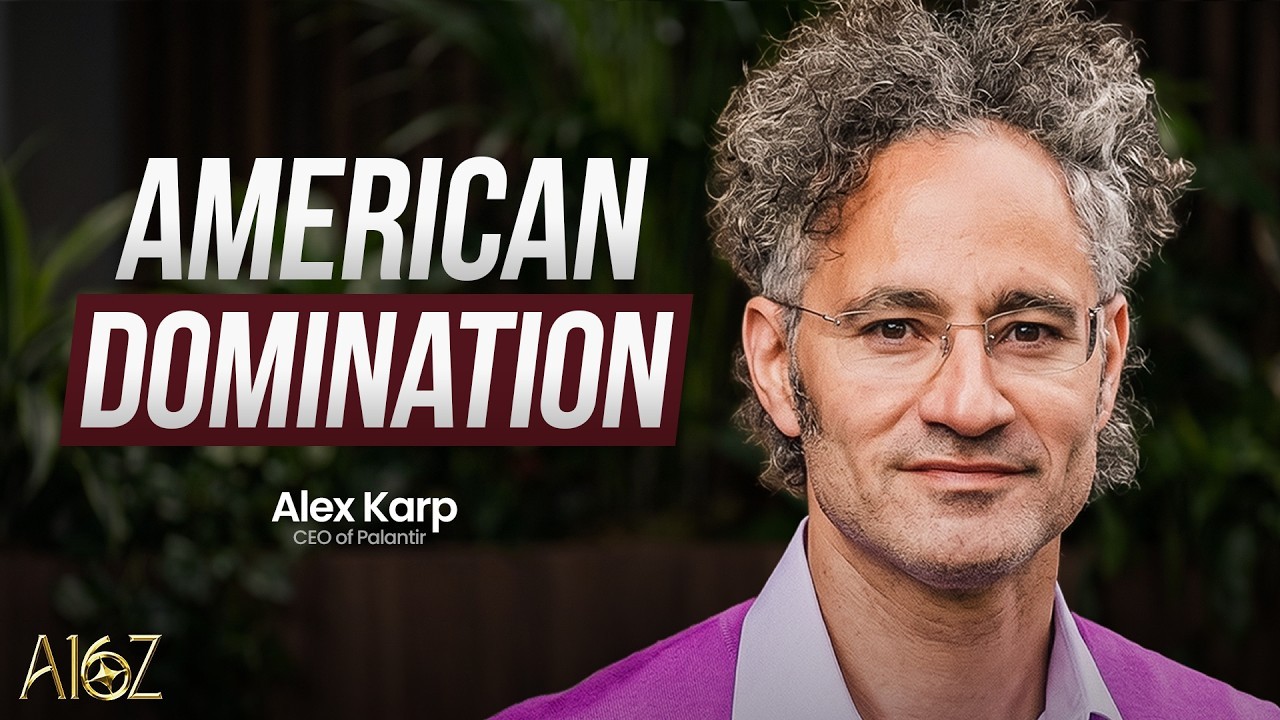
THESIS
//
//
//
//
NECESSARY CONDITION
Regulatory frameworks must remain permissive to innovation (avoiding the 'European' model) and open source development must remain unencumbered by downstream liability.
15:42
RISK
Steel Man Counter-Thesis
The thesis that American technological superiority is self-sustaining and politically durable inverts under three structural conditions. First, deterrence through technological dominance requires continuous relative advantage, but adversaries learn and adapt. The shock value of Operation Midnight Hammer and Venezuelan operations degrades rapidly as opponents reverse-engineer capabilities, develop countermeasures, and recruit technical talent through alternative incentive structures. China's centralized industrial policy can mobilize resources faster than democratic procurement cycles once the capability gap is understood. Second, the American advantage Carp celebrates is contingent on a narrow cohort of neurodivergent builders who are culturally alienated from the military institutions they serve and the political system that could regulate them. This human capital is not reproducible at scale, creates key-person risk at the national level, and can be neutralized through emigration, retirement, or the very psychiatric marginalization Carp decries. Third, the meritocratic military institution that integrated before society did is not the same institution procuring AI systems today. The acquisition bureaucracy, not the warfighter, controls capital allocation. If Palantir's products succeed despite the system rather than because of it, scaling becomes dependent on political patronage rather than capability, which is fragile to administration changes. The current moment may represent peak American advantage rather than sustainable dominance.
//
THESIS
DEFENSE
//
THESIS
DEFENSE
//
THESIS
DEFENSE
//
ASYMMETRIC SKEW
Upside is capped by adversary adaptation curves and political sustainability constraints. Downside extends to nationalization of the entire technology sector, constitutional crisis over surveillance capabilities, and loss of technical talent pool if neurodivergent individuals are not protected. The asymmetry favors downside scenarios because multiple independent failure modes exist, while upside requires simultaneous success across technology, politics, and culture.
ALPHA
NOISE
The Consensus
The market consensus prior to recent events held that American military technological superiority had eroded, that deterrence capabilities were weakened, and that the defense technology sector remained a niche investment category separate from mainstream Silicon Valley AI development. The prevailing view positioned China as the emerging AI superpower with America's advantage unclear or diminishing.
The market assumes AI value accrues primarily to foundation model providers (LLM builders), that commercial applications drive the AI market, and that defense contracts represent a smaller, slower-growth segment with procurement friction. The consensus causality chain suggests: LLM capability leads to commercial dominance leads to eventual defense applications.
SIGNAL
The Variant
Karp asserts that American deterrence capability has been decisively re-established through recent military operations in Iran, Venezuela, and the Middle East, representing a fundamental inflection point. He believes America now possesses overwhelming technological military superiority that adversaries recognize but domestic observers underappreciate. The variant perception is that defense technology has moved from peripheral to central in the AI value chain, and that the integration of software, hardware, and AI orchestration—not raw LLM capability—will determine geopolitical outcomes.
Karp inverts the causality entirely. His logic chain runs: battlefield operational requirements demand orchestration layers that manage LLMs (not LLMs themselves), therefore Palantir's ontology and deployment infrastructure becomes the choke point. He explicitly states 'the last company standing before we all have to salute the overlord of the LLM will be Palantir' because orchestration, security, and operational specificity cannot be commoditized. The further variant is political-economic: if Silicon Valley eliminates white-collar jobs while appearing indifferent to military needs, nationalization of AI technology becomes inevitable. The causality runs from societal backlash to regulatory seizure, not from commercial success to durable value.
SOURCE OF THE EDGE
Karp claims three sources of edge: twenty years of operational deployment with military and intelligence services, direct involvement in active operations ('I'm talking to them constantly'), and a claimed position mediating between Silicon Valley and Washington that others cannot occupy. The credibility assessment is mixed. The operational experience edge is genuine—Palantir has deployment history no competitor matches, and the recent military actions referenced appear to validate capability claims that were previously theoretical. The political mediation edge is performative but grounded in reality: Karp has cultivated relationships across the political spectrum and understands Washington's pressure points, but his claim to uniquely bridge these worlds overstates his singular importance. The weakest edge claim is the prediction about LLM commoditization leaving orchestration providers dominant—this is a narrative convenient to Palantir's positioning rather than a demonstrated structural advantage. Adversaries 'not understanding how America is doing this' is asserted rather than evidenced. The overall assessment: genuine operational edge from accumulated deployment experience, moderate political positioning edge, speculative claims about AI architecture evolution.
//
CONVICTION DETECTED
• God bless our troops. God bless America and gentlemen start your engines • we are the power that actually has the decisive vote and that is with military superiority • the most important thing Palantir is doing is to make sure that American war fighters are much more likely to come home • If Silicon Valley believes we are going to take away everyone's white collar job... If you don't think that's going to lead to nationalization of our technology, you're fucked • I literally believe we're doing the work of a higher purpose • the last company standing before we all have to salute the overlord of the LLM will be Palantir • America has reestablished deterrence. That actually just happened • our single advantage is to augment neurodivergent highly individual people
//
HEDGE DETECTED
• there's some legitimate criticisms of any company • I'm not super neocon • that perception might is obviously a caricature • I suspect in the end one and a half provider • in my view you could create a lot of prosperity • without going into details on all these breakdowns because I was in the middle of it • it's always hard to know when you're really like I view myself as an artist • maybe not the most important The ratio of conviction to hedging is heavily skewed toward conviction. The hedges that appear are almost exclusively social hedges—acknowledging alternative views before dismissing them—rather than genuine epistemic uncertainty about core claims. When Karp hedges, it is typically about peripheral matters (his artistic self-conception, exact market structure outcomes) rather than his central theses about American superiority, Palantir's role, or the political trajectory of AI regulation. This pattern suggests high internal confidence in core propositions with performative modesty on details. The analytical implication: weight should be placed on Karp's macro directional claims about deterrence restoration and political risk to Silicon Valley, while treating specific predictions about market structure with skepticism given they conveniently serve Palantir's narrative.